Alibaba Launches First AI Model Suite for Robots as China Pivots from Chatbots to Agentic AI
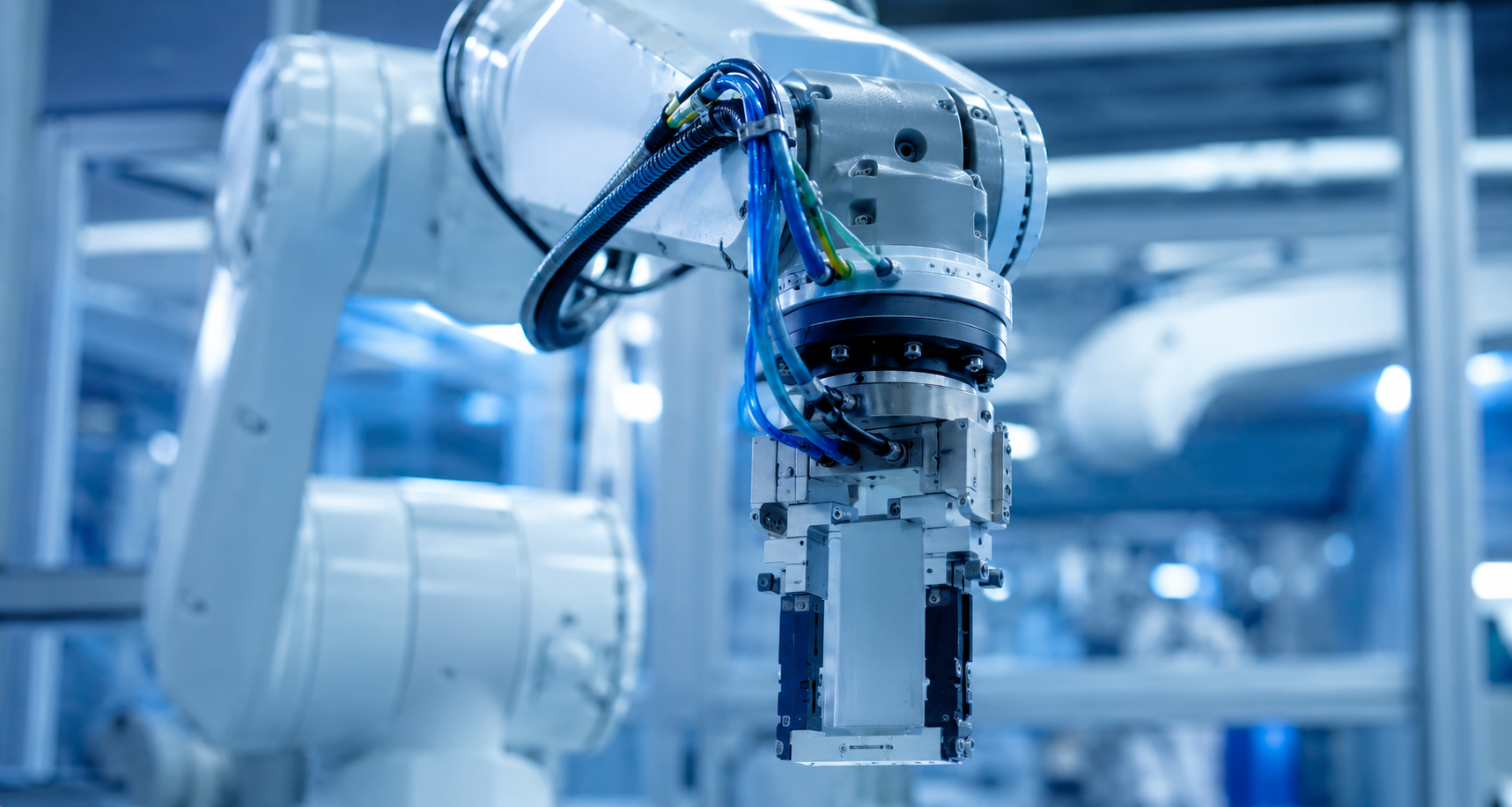
Alibaba has unveiled its first suite of AI models purpose built for robots, marking a significant shift in the priorities of China's technology industry away from general purpose chatbots toward agentic systems capable of executing complex physical and digital tasks.
Key Takeaways
- ▸Alibaba has launched its first AI model suite designed specifically for robots, marking a shift from chatbot to agentic AI development as its primary strategic priority.
- ▸The move places Alibaba alongside other major technology companies pivoting toward physical and agentic AI applications as the commercial value of conversational benchmarks diminishes.
- ▸Alibaba Cloud operates in the UAE and its Qwen model family is already used in MENA enterprise deployments, making the robotics suite relevant for Gulf organisations exploring physical AI applications.
- ▸China's major AI labs are accelerating into agentic AI at a pace that compresses expected timelines, adding competitive pressure on US AI developers and expanding platform options for Gulf enterprise buyers.
Alibaba has released its first suite of artificial intelligence models designed specifically for robotics, signalling that China's technology sector is moving its primary focus away from conversational chatbots toward agentic AI systems capable of executing complex tasks and making machines more intelligent. The announcement, made on 16 June, represents one of the most significant product developments from a major Chinese AI lab this year and adds a new front to the global competition in enterprise AI capability.
The launch places Alibaba alongside a growing number of technology companies pivoting their AI investment toward physical and agentic applications. The shift reflects a commercial logic that is becoming clearer across the industry: large language models have reached a point where differentiation on conversational benchmarks is diminishing, while the ability to take actions, operate machines, and execute multi-step workflows autonomously represents the next layer of commercial value. Alibaba's move into robotics AI models is a direct expression of that thesis at scale. It follows a similar trajectory to ByteDance's Seed 2.0 launch earlier this year, which also marked a deliberate shift from consumer experimentation toward large-scale enterprise deployment among China's leading AI labs.
For enterprise technology leaders across the Gulf, the development carries several layers of relevance. Alibaba Cloud operates a data centre in the UAE and is an active infrastructure and AI services provider across the region. The company's open source model family, Qwen, is already used in enterprise deployments across MENA, making the robotic AI suite a near term consideration for organisations in the region exploring physical AI applications in logistics, manufacturing, and critical infrastructure. Gulf sovereign wealth funds tracking China's AI stack as part of their investment strategy will also note the speed at which Alibaba has moved from foundational models to applied robotics capability, compressing what many industry observers expected to be a two to three year product development cycle into a matter of months.
The broader strategic picture is one of acceleration. China's leading AI labs, including Baidu, ByteDance, and now Alibaba, have each accelerated their transition toward agentic and physical AI systems in the first half of 2026. This pace creates direct competitive pressure on US AI labs, which have been simultaneously managing regulatory disputes, including the US government's recent restrictions on Anthropic's Fable 5 and Mythos 5 models for foreign nationals, that their Chinese competitors do not face in the same form.
For Gulf enterprises evaluating AI platform choices, the expansion of capable, open source Chinese AI models into robotics and agentic domains adds a third option alongside US model developers and locally developed Arabic language models. The KPMG and INSEAD AI Board Governance Principles released this month explicitly flag vendor ecosystem decisions and technology sovereignty as board level concerns, a framing that gives added weight to understanding where the world's major AI model providers are directing their development effort. The Alibaba robotics suite is one of the clearest signals yet of where that effort is going in China.
Related Articles
UAE's $30B Stargate AI Campus Gets a Wartime Redesign
The UAE is restructuring its flagship $30 billion Stargate AI campus from a single 26-square-kilometre site into a distributed network of hardened facilities, after drone and missile strikes damaged AWS data centres in the UAE and Bahrain during the regional conflict.
Sep 15, 2026
IntelligenceSaudi Arabia Sets Out 14GW AI Computing Ambition, Using Groq as the Model to Scale
Saudi Arabia is working with the private sector to build more than 14 gigawatts of AI computing capacity, Communications Minister Abdullah Al Swaha said in Silicon Valley, framing the Kingdom's pitch to global AI companies around compute, capital and customer access, with Groq held up as proof the model already works.
Sep 14, 2026
IntelligenceDubai Police's New AI Shift Management System Is Built to Scale Across All of Dubai Government
Dubai Police and Digital Dubai have launched an AI-Assisted Shift Management System that matches staff skills to operational needs in real time, built on the government's shared GRP infrastructure and designed from the outset to expand across all of Dubai's government entities.
Sep 11, 2026
IntelligenceVodafone, Cassava and Elsewedy Electric to Build Egypt's First Sovereign AI Data Centre
Vodafone Business, Cassava Technologies and Elsewedy Electric have signed an agreement to build Africa Data Centers Egypt, including the country's first sovereign AI data centre powered by Nvidia GPUs, targeting up to $1 billion in investment upon completion.
Sep 10, 2026
IntelligenceHP's Four-Front Bet on Saudi Arabia: Manufacturing, R&D, Talent and Startups
HP's Riyadh plant is now shipping devices commercially, while its AI R&D centre, AgentOne, FlowMaster, and Garage 2.0 push the company from vendor to builder inside Saudi Arabia's Vision 2030 economy.
Sep 9, 2026