The Stegosaurus Paradox: Analyzing the Economic Sustainability of Frontier AI Models
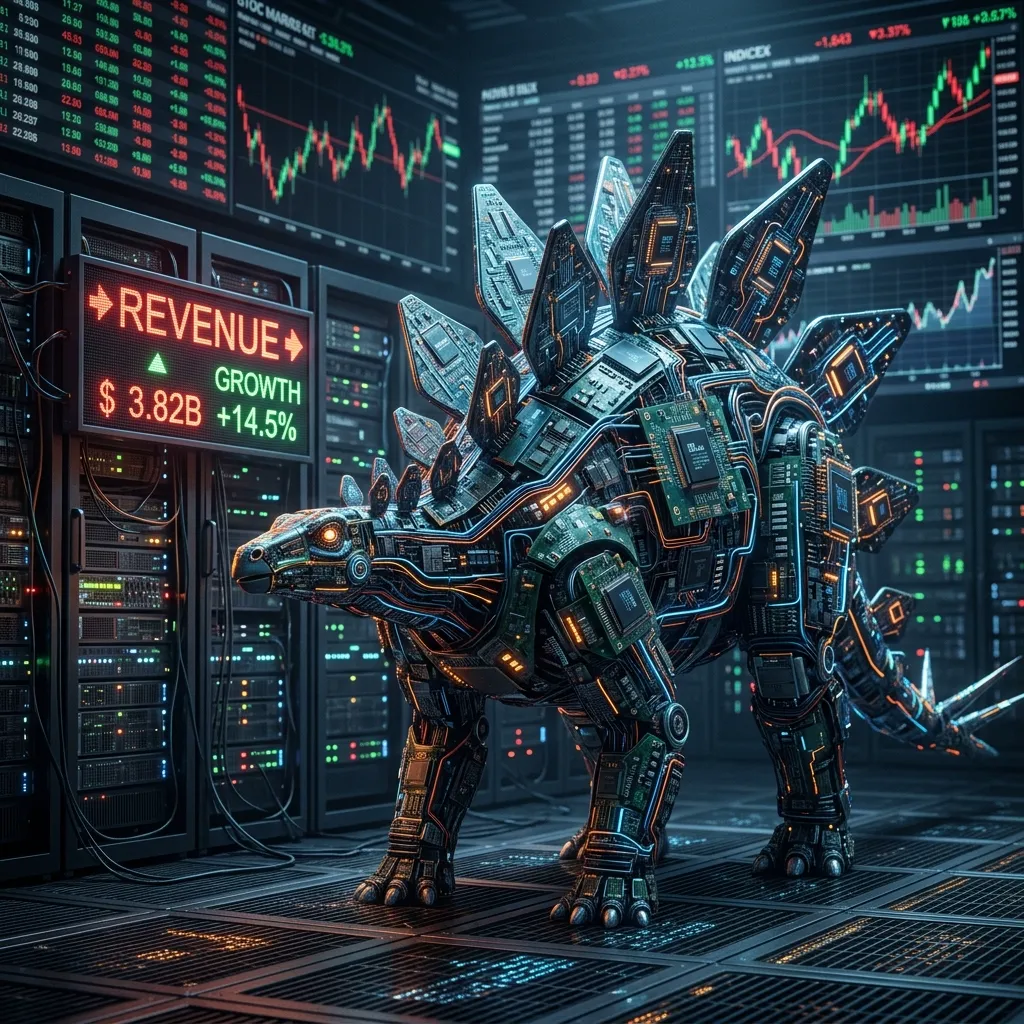
For the past several years, the artificial intelligence sector has operated under a venture-subsidized "free ride" model. That era is coming to a definitive end.
As capital investment in AI data centers is projected to reach $6.3 trillion by 2029, frontier labs such as OpenAI and Anthropic are facing immense pressure to deliver returns. This article examines the pivot toward aggressive monetization—including API restrictions, metered billing, and in-platform advertising—and evaluates the systemic "Stegosaurus Paradox" threatening the industry's long-term viability.
1. The Fiscal Reality: The ROIC Threshold
To justify the hundreds of billions in capital expenditures (CapEx) poured into compute and infrastructure, AI model providers must achieve a specific Return on Invested Capital (ROIC). This is particularly critical in regions like the GCC where sovereign wealth funds are closely monitoring value realization.
- The Target: A 25% ROIC is the benchmark for "historic returns."
- The Survival Line: An ROIC of 12% is required to maintain capital interest.
- The Failure Zone: Anything below 7% results in asset write-downs.
To reach the minimum 7% threshold, large AI firms must generate cumulatively close to $7 trillion in revenue through 2029.
2. The Token Economy and the Scaling Gap
AI revenue is primarily driven by the sale of "tokens"—units of data processed by models. The current economic challenge lies in the sheer volume of consumption required to meet revenue targets.
| Metric | Current Estimate | Required by 2030 |
|---|---|---|
| Token Volume | 100–200 Quadrillion | 10 Sextillion |
| Annual Revenue | ~Early Billions | $2 Trillion |
3. Inference Costs and the "Reasoning" Burden
The rise of "reasoning" models and autonomous agents has shifted the burden to inference. Reasoning models expend thousands of tokens "thinking" through paths that the user never sees, eroding the profit margins of flat-rate subscription plans.
4. Market Response: The "Squeeze"
In response, model providers have begun implementing metered billing, API throttling, and ad integration. As noted in Anthropic's latest economic report, the era of unlimited access is fading.
5. The "Stegosaurus Paradox"
The "Stegosaurus Paradox" posits that AI has a massive body (infrastructure/cost) supported by a disproportionately small head (revenue streams). For the "Stegosaurus" to survive, the mouth must grow, and the diet must become "highly nutritious." This means AI must move beyond a browser tab and be infused into the global economy—taking a micro-transactional cut of every interaction.
6. Conclusion
The era of venture-subsidized AI was a strategic land grab. However, the current "upside-down" economics suggests a looming market reset. Whether the industry can bridge the 50,000x growth gap in token consumption without pricing out its core user base remains the defining question for the next 24 months of tech evolution.