Saudi Arabia's FII Institute Launches AI Climate Risk Report as Gulf Infrastructure Faces Intensifying Pressure
The Future Investment Initiative Institute has launched a report examining how artificial intelligence can help governments, insurers, and infrastructure operators better anticipate and respond to climate-related disasters, as Gulf critical infrastructure faces mounting climate and geopolitical pressure in 2026.
Key Takeaways
- ▸The FII Institute has published a report examining how AI can improve climate risk prediction, disaster response, and infrastructure resilience, drawing on Munich Re data showing 320 billion US dollars in global natural catastrophe losses in 2024.
- ▸The report identifies data provenance, verification, and infrastructure monitoring firms as the most durable commercial opportunities in the climate AI ecosystem.
- ▸For the GCC, the report is directly relevant to desalination infrastructure, coastal smart cities, and concentrated energy assets that face specific climate risk exposure.
- ▸The report warns that AI climate tools will only deliver impact if they are trusted, explainable, locally relevant, and supported by strong data systems, directly echoing governance frameworks being built across the Gulf.
The Future Investment Initiative Institute, the Saudi nonprofit foundation with an investment mandate and a focus on AI, sustainability, healthcare, and education, has published a new report titled Artificial Intelligence for Climate Risk Prediction and Adaptation. The report was released on 15 June in connection with FII PRIORITY Europe 2026, taking place in Rome from 17 to 19 June under the theme Europe Reimagined: Capital, Sovereignty and Strategic Autonomy.
The report examines how artificial intelligence can help governments, emergency managers, investors, and communities better anticipate, prepare for, and respond to climate-related disasters. It draws on Munich Re data showing that global natural catastrophe losses reached approximately 320 billion US dollars in 2024, including 140 billion US dollars in insured losses, to frame the scale of the problem AI is being asked to address.
The practical applications identified span the full disaster lifecycle. On the prevention and preparation side, AI is enabling faster climate forecasting, digital twin technologies that simulate infrastructure performance under stress conditions, and preventive maintenance systems that identify failure risks before events occur. On the response side, AI tools are being used for real-time disaster monitoring, rapid damage assessment for housing recovery, and dynamic resource allocation under time pressure. The report flags firms focused on data provenance, verification, and infrastructure monitoring as representing some of the most durable commercial opportunities within the climate AI ecosystem, a framing directly relevant to Gulf investors assessing where sustainable AI revenue will emerge as the sector moves from subsidised growth toward genuine monetisation.
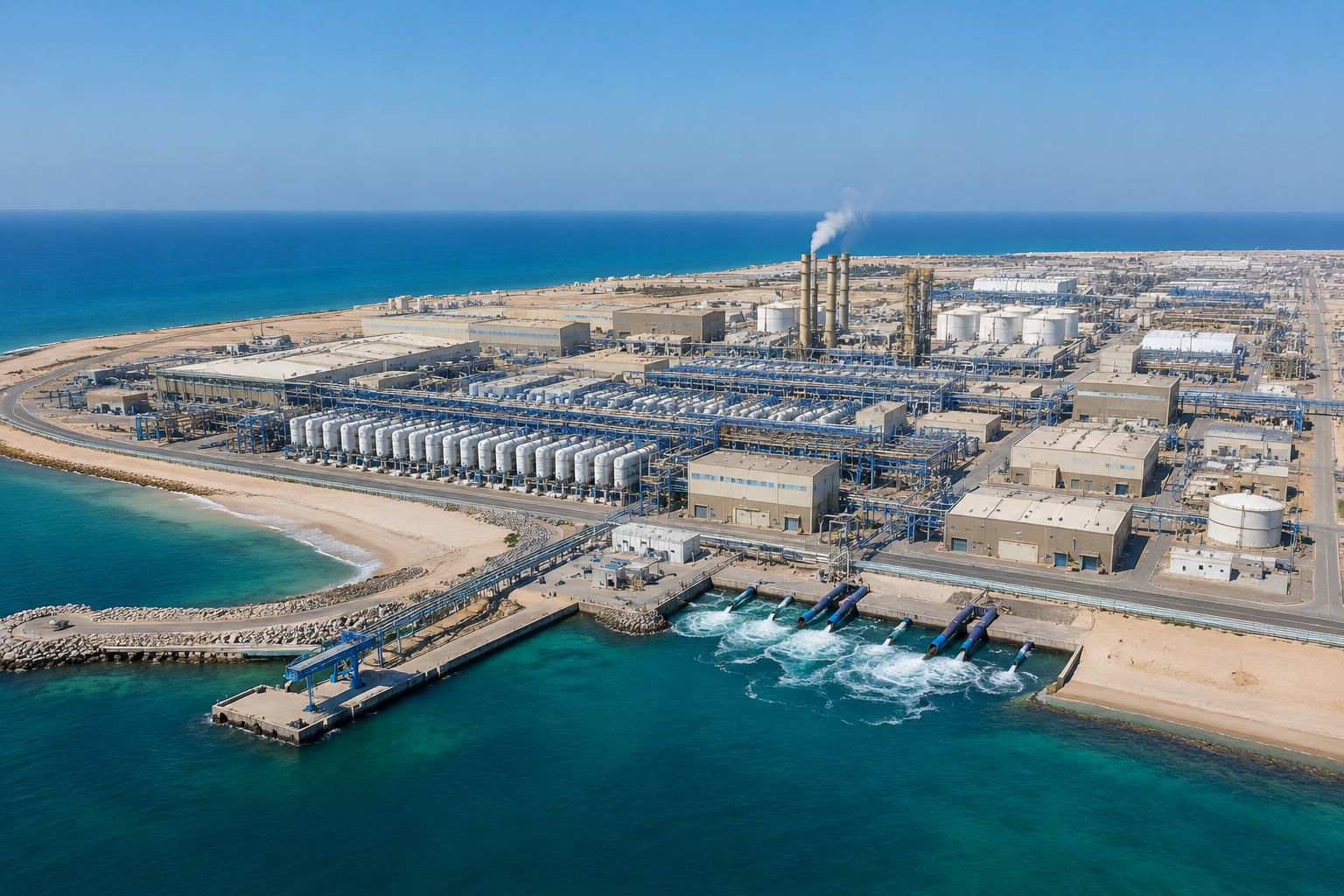
For the GCC specifically, the intersection of climate risk and AI capability is more than a policy abstraction. The Gulf's desalination-dependent water infrastructure, its coastal smart city developments, its concentrated energy assets, and its ambition to run agentic AI across government services at scale all create specific vulnerabilities that climate-AI tools are designed to address. The FII report's warning that AI tools will only deliver real impact if they are trusted, explainable, locally relevant, and supported by strong data systems directly echoes the governance principles the region is simultaneously trying to build, as illustrated by the UAE's planned co-chairmanship of the 2027 global AI Summit and hosting of the 2028 edition.
The report also identifies a significant digital and knowledge divide between the Global North and Global South in access to credible climate AI tools, trusted data sources, and educational resources. For Gulf policymakers who have committed to using their AI infrastructure investments as a vehicle for broader development impact, this divide represents both a challenge and an opportunity. The FII Institute's decision to launch the report at a European summit focused on capital, sovereignty, and strategic autonomy is itself a signal. Saudi Arabia's AI institutions are increasingly participating in the global conversation about how AI governance, climate resilience, and sovereign capability intersect, not as a peripheral voice but as a significant capital allocator with a clear national interest in getting those frameworks right.
Related Articles
Everyone Expects Two AI Blocs. The Gulf Is Betting It Doesn't Have to Choose
Saudi Arabia is simultaneously the deepest US AI partner in the Gulf and the home of a sovereign AI company that just built its flagship Arabic model on Chinese architecture, and according to a new analysis, that isn't a contradiction, it's the point.
Sep 16, 2026
AnalysisHumain and G42 Look to Raise Outside Capital as Gulf AI Giants Weigh IPOs
Saudi Arabia's Humain and Abu Dhabi's G42 are both exploring outside capital and potential IPOs as their AI ambitions scale beyond sovereign funding alone.
Sep 8, 2026
AnalysisDubai Police Deploy 36 AI Robots, Complete 104 Technology Projects
Dubai Police has deployed 36 RPA robots and completed 104 technology projects over the past year as it expands AI across policing and administrative operations.
Sep 7, 2026
AnalysisDubai Chambers Launches Agentic AI Training for 14,000 Member Companies
Dubai Chambers has launched specialised Agentic AI training tracks through a new e-learning platform, aiming to equip more than 14,000 member companies with the skills to adopt the technology across their operations.
Sep 2, 2026
AnalysisHumain and DataVolt Partner for 100MW AI Data Centre on Saudi Arabia's Red Sea Coast
Saudi AI firm Humain has partnered with DataVolt to build a 100MW data centre at Oxagon, NEOM, the first phase of a larger 1.5 gigawatt AI campus.
Sep 2, 2026