Dubai Police Deploy 36 AI Robots, Complete 104 Technology Projects
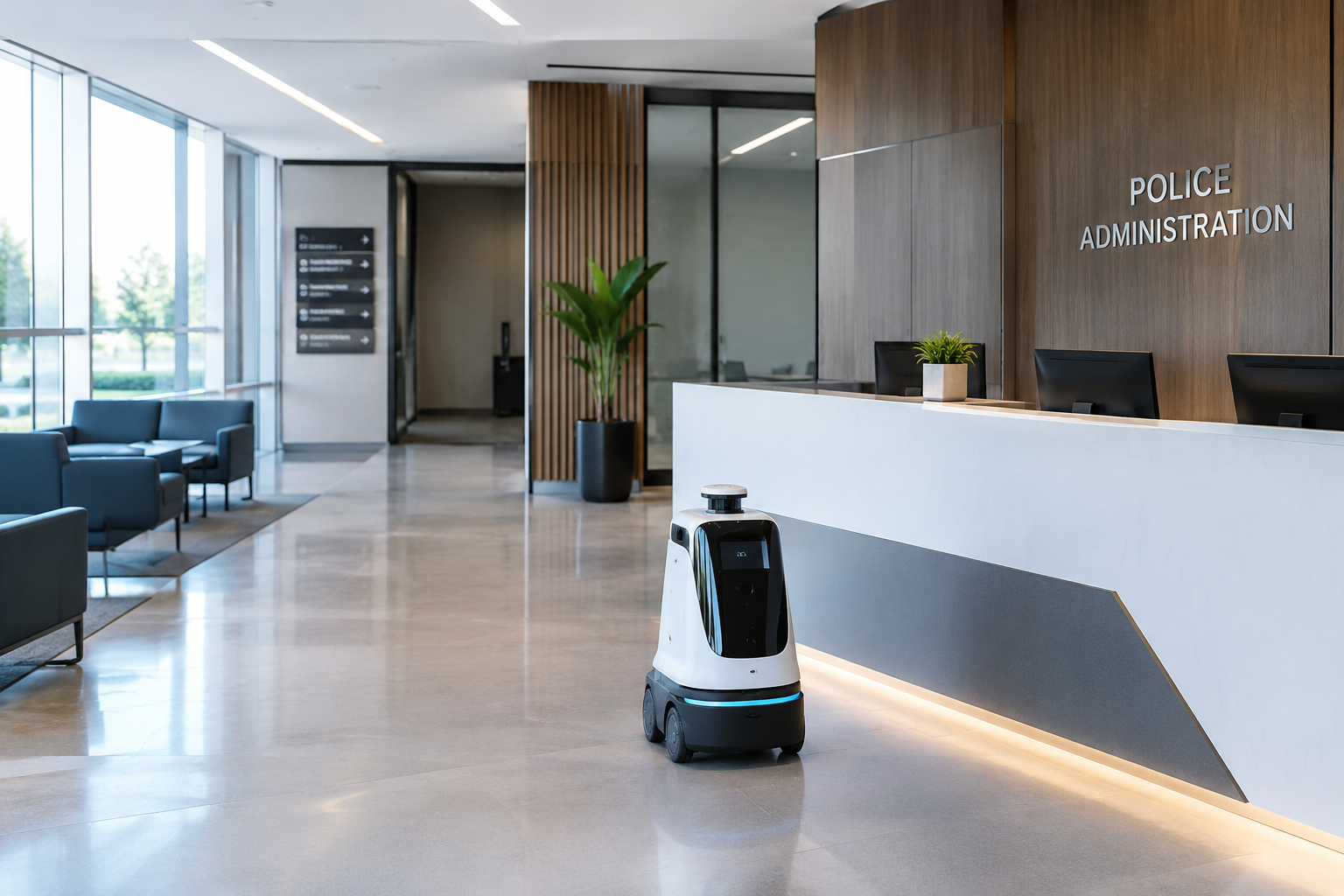
Dubai Police has deployed 36 RPA robots and completed 104 technology projects over the past year as it expands AI across policing and administrative operations.
Key Takeaways
- ▸Dubai Police completed 104 technology projects and deployed 36 RPA robots over the past year.
- ▸Digital service continuity reached 99.97% for public services and 99.92% for systems.
- ▸The General Department of Artificial Intelligence received 7 awards and registered 29 intellectual works.
- ▸Leadership emphasised pairing AI expansion with specialised human staff rather than replacing them.
Dubai Police has completed 104 strategic and operational technology projects over the past year and deployed 36 robotic process automation robots across policing and administrative operations, part of a continuing expansion of artificial intelligence across the force's day-to-day functions. The figures were reviewed by Lieutenant General Abdulla Khalifa Al Marri, Commander-in-Chief of Dubai Police, during his annual inspection of the General Department of Artificial Intelligence.
The scale of RPA deployment here is worth noting for what it signals about where AI adoption inside a large government security organisation actually concentrates first. Robotic process automation, software robots that handle repetitive, rules-based digital tasks rather than physical machines, is typically the entry point for large organisations introducing AI at scale, precisely because it targets administrative bottlenecks with a clear, measurable return before extending into more complex operational or public-facing systems. Dubai Police describes its 36 robots as covering a range of tasks and administrative operations, with the stated benefits centred on speeding up procedures, increasing productivity and reducing routine workload, the classic RPA value proposition rather than a more ambitious autonomous decision-making claim.
Digital service continuity data reported alongside the AI expansion figures gives a useful sense of operational reliability at scale. Public services recorded a continuity rate of 99.97 percent over the past year, with underlying systems reaching 99.92 percent uptime. For a police force whose digital services span emergency response coordination, public safety reporting and a wide range of administrative functions, sustaining continuity at that level while simultaneously expanding automated and AI-driven systems is a genuinely harder operational achievement than either metric in isolation suggests, since new automation deployments typically introduce fresh points of potential failure even as they remove others.
Al Marri was also briefed on the Dubai Police AI platform, described as supporting data analysis, procedure automation, smart solutions and digital tools for both employees and customers, alongside a smart assistant built for the force's Smart Police Stations network, designed to deliver police and security services through an integrated system operating around the clock. The Smart Police Stations initiative itself is not new, but the addition of a dedicated smart assistant layer reflects the same pattern visible across the UAE's broader government AI transformation this year: existing digital infrastructure being upgraded with AI-native interaction layers rather than replaced wholesale.
The General Department of Artificial Intelligence's institutional track record over the reporting period adds a further data point worth registering. The department reported receiving seven awards and certificates of recognition for its projects and initiatives, and has registered 29 intellectual works, an indication that at least part of the department's output is generating original, protectable technical development rather than solely deploying third-party AI tools and platforms.
Al Marri's remarks alongside the figures are worth reading closely for what they reveal about how the force is framing this expansion internally. He stressed the need to continue developing AI capabilities and adopting modern technologies across police, administrative and operational functions, but paired that directly with an emphasis on specialised staff, explicitly stating that advanced technology and human expertise need to work together as digital systems evolve. That framing, technology and trained personnel advancing together rather than one substituting for the other, echoes the "human leads, AI enables" language that has anchored the UAE's national agentic AI programme more broadly, suggesting Dubai Police's own AI expansion is being consciously aligned with that wider governance principle rather than developing along a separate internal track.
Al Marri also called for continued focus on readiness and business continuity, alongside regular improvements to systems and services to keep them secure, efficient and reliable, a framing that treats security and reliability as ongoing operational disciplines requiring sustained attention as AI expands, rather than a one-time implementation milestone to be checked off.
For technology vendors, systems integrators and other GCC government entities tracking how large security-sector organisations are sequencing AI adoption, Dubai Police's approach offers a useful reference point distinct from the more headline-grabbing national platforms and agentic AI targets dominating coverage of the UAE's broader transformation this year. Rather than a single flagship AI initiative, the force's progress spans a genuinely wide base, 104 separate technology projects, RPA deployment, a dedicated AI platform, a smart assistant layer, and an internal department generating its own registered intellectual property, indicating AI adoption inside Dubai Police has moved into broad-based operational integration rather than concentrated pilot activity around one or two showcase systems.
Frequently Asked Questions
How many robots has Dubai Police deployed?
36 robotic process automation (RPA) robots, used across policing and administrative tasks.
What digital service continuity did Dubai Police report?
A continuity rate of 99.97% for public services and 99.92% for underlying systems over the past year.
What other AI systems does Dubai Police use?
A dedicated AI platform for data analysis and procedure automation, and a smart assistant for its Smart Police Stations network.
Related Articles
Dubai Chambers Launches Agentic AI Training for 14,000 Member Companies
Dubai Chambers has launched specialised Agentic AI training tracks through a new e-learning platform, aiming to equip more than 14,000 member companies with the skills to adopt the technology across their operations.
Sep 2, 2026
AnalysisHumain and DataVolt Partner for 100MW AI Data Centre on Saudi Arabia's Red Sea Coast
Saudi AI firm Humain has partnered with DataVolt to build a 100MW data centre at Oxagon, NEOM, the first phase of a larger 1.5 gigawatt AI campus.
Sep 2, 2026
AnalysisUAE Banks Federation Chief: Agentic AI Is Banking's Next Phase, But Accountability Must Stay Human
UAE Banks Federation Director General Jamal Saleh argues agentic AI will define banking's next phase, pointing to the UAE's regulatory model as a template for the region, though one figure he cites needs context.
Aug 28, 2026
AnalysisDubai Chambers Signs Agentic AI Agreement with India's NASSCOM to Accelerate Private-Sector Adoption
Dubai Chambers has signed a preliminary agreement with India's NASSCOM to accelerate agentic AI adoption among private-sector companies in the UAE.
Aug 20, 2026
AnalysisAbu Dhabi's AIREV Partners with Qualcomm to Expand Sovereign Agentic AI Deployment
Abu Dhabi's AIREV has partnered with Qualcomm to integrate its autonomous AI platform with Qualcomm Dragonwing hardware, enabling sovereign AI deployment.
Aug 14, 2026