Humain and DataVolt Partner for 100MW AI Data Centre on Saudi Arabia's Red Sea Coast
Saudi AI firm Humain has partnered with DataVolt to build a 100MW data centre at Oxagon, NEOM, the first phase of a larger 1.5 gigawatt AI campus.
Key Takeaways
- ▸Humain and DataVolt will build a 100MW first-phase AI data centre at Oxagon, NEOM, on Saudi Arabia's Red Sea coast.
- ▸The facility is expected online by 2028, integrating renewable energy and high-performance computing.
- ▸It forms part of a larger 360MW phase within a 1.5 gigawatt planned AI campus.
- ▸Humain, backed by Saudi Arabia's PIF, targets 6.6GW of AI capacity by 2034.
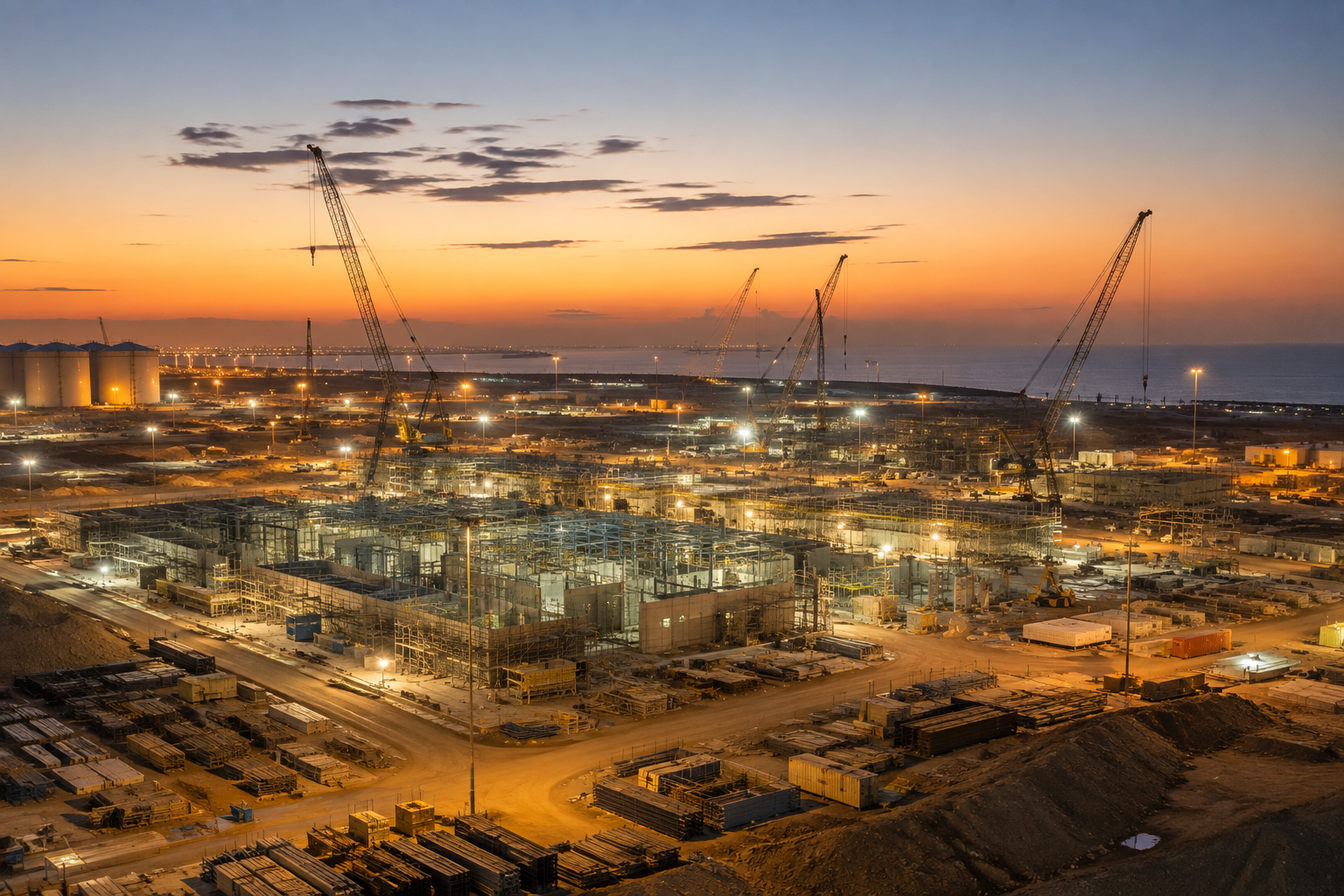
Saudi Arabia's AI infrastructure buildout has added another concrete data point to what has so far been a rapid succession of announcements rather than completed projects. Humain, the Kingdom's state-backed artificial intelligence company, has partnered with digital infrastructure firm DataVolt to develop the first phase of a data centre at Oxagon, an industrial city under development within NEOM on Saudi Arabia's Red Sea coast, according to a statement from NEOM.
The initial phase will bring around 100 megawatts of capacity online, forming part of a considerably larger 360 megawatt first stage within DataVolt's planned AI data centre campus at the site. That campus is itself only one component of a wider 1.5 gigawatt AI development planned for Oxagon, giving a sense of the scale this single announcement sits within. The facility is expected to be operational by 2028, and NEOM says it will integrate renewable energy sources, advanced cooling technologies and high-performance computing clusters designed specifically for AI workloads rather than general-purpose data processing.
The site selection is not incidental. Oxagon's appeal for this kind of project rests on a specific combination of factors: pre-zoned industrial land already available for development, at-scale energy resources, and access to low-latency computing through subsea cable connectivity linking the coast to broader regional and international networks. For an AI data centre campus of this size, the combination of available land, power and connectivity infrastructure matters as much as the compute hardware itself, since a facility capable of housing gigawatt-scale AI infrastructure is only as useful as the energy grid and network backbone supporting it.
Humain's own trajectory gives this specific project useful context. Established last year and backed by Saudi Arabia's Public Investment Fund, the company has moved quickly to secure a series of agreements with global technology firms, and it has set a public target of reaching 6.6 gigawatts of AI computing capacity by 2034. Measured against that target, a single 100 megawatt first phase is a modest fraction of the company's stated ambition, but it represents genuine, dated progress toward it, an operational facility with a 2028 timeline, rather than a further announcement of intent layered on top of previous ones.
This deal also arrives against a backdrop worth acknowledging honestly. NEOM was unveiled nearly a decade ago as a flagship component of Saudi Arabia's economic diversification push, and its broader plans have faced real scrutiny and scaling back amid cost overruns and softer-than-anticipated global oil prices in recent years. An AI-specific data centre deal at Oxagon, backed by a state entity with PIF funding behind it and paired with an established digital infrastructure partner in DataVolt, represents a narrower, more commercially defined use of the site than NEOM's original, more sweeping urban vision. Whether that narrower framing reflects a deliberate strategic recalibration toward AI infrastructure specifically, where global demand and capital availability are currently strongest, or simply one workable project moving forward within a broader plan that has struggled elsewhere, is likely to become clearer as the facility approaches its 2028 completion date.
The deal fits a broader regional pattern that has become increasingly difficult to overstate. Saudi Arabia and its Gulf peers are accelerating AI infrastructure investment specifically to capture surging global demand for computing power, a race that has already reshaped how much capital Gulf sovereign wealth funds and state-backed companies are directing toward data centres, chips and AI-adjacent infrastructure over the past two years. Every additional gigawatt of announced or under-construction capacity, this project included, adds to a regional compute buildout that increasingly rivals established hubs in the US, Europe and East Asia in stated ambition, even as questions remain about how many of these projects will reach completion on their announced timelines.
For enterprises and investors evaluating Saudi Arabia's AI infrastructure market specifically, the Humain-DataVolt partnership offers a useful marker distinct from headline capacity figures alone: a dated project, a named site with genuine infrastructure advantages, and a defined operator relationship between a PIF-backed AI company and an established digital infrastructure firm. As the broader 1.5 gigawatt Oxagon campus continues to take shape, this 100 megawatt first phase will be one of the more concrete near-term signals of whether Saudi Arabia's AI infrastructure ambitions are translating into operational capacity on the timeline the Kingdom has set for itself.
Frequently Asked Questions
What did Humain and DataVolt announce?
A partnership to develop a 100MW first phase of an AI data centre at Oxagon, NEOM, part of a larger 360MW first stage within a 1.5GW planned AI campus.
When will the facility be operational?
The facility is expected to be available in 2028.
What is Humain's broader capacity target?
Humain, backed by Saudi Arabia's Public Investment Fund, is targeting 6.6 gigawatts of AI computing capacity by 2034.
Why was Oxagon chosen as the site?
Pre-zoned industrial land, at-scale energy resources, and low-latency computing access via subsea cable connectivity.
Related Articles
UAE Banks Federation Chief: Agentic AI Is Banking's Next Phase, But Accountability Must Stay Human
UAE Banks Federation Director General Jamal Saleh argues agentic AI will define banking's next phase, pointing to the UAE's regulatory model as a template for the region, though one figure he cites needs context.
Aug 28, 2026
AnalysisDubai Chambers Signs Agentic AI Agreement with India's NASSCOM to Accelerate Private-Sector Adoption
Dubai Chambers has signed a preliminary agreement with India's NASSCOM to accelerate agentic AI adoption among private-sector companies in the UAE.
Aug 20, 2026
AnalysisAbu Dhabi's AIREV Partners with Qualcomm to Expand Sovereign Agentic AI Deployment
Abu Dhabi's AIREV has partnered with Qualcomm to integrate its autonomous AI platform with Qualcomm Dragonwing hardware, enabling sovereign AI deployment.
Aug 14, 2026
AnalysisWorld Bank Names UAE a Global AI Leader in Foundation Models and Talent
The World Bank's 2026 World Development Report names the UAE among a small group of countries building advanced foundation AI models from scratch.
Aug 11, 2026
AnalysisDubai to Automate Building Permit Approvals with AI, Cutting Days to Minutes
Dubai Municipality is rolling out an AI system that automatically issues building permits for villas, cutting processing times from days to minutes.
Aug 10, 2026