TechPulse MEA 2026: Dubai Event Maps AI Governance and Enterprise Adoption Across the Gulf
At TechPulse MEA 2026 in Dubai, Deloitte, IBM and Planview leaders warned that AI's shift from pilot to enterprise scale in the UAE now hinges on governance, trusted data and workforce reskilling.
Key Takeaways
- ▸70% of UAE professionals use AI daily versus 18% global average
- ▸Panellists say governance, not technology, is the main adoption bottleneck
- ▸AI could add $96bn to $100bn to UAE economy by 2030
UAE Enterprises Move From AI Pilots to Live Deployment
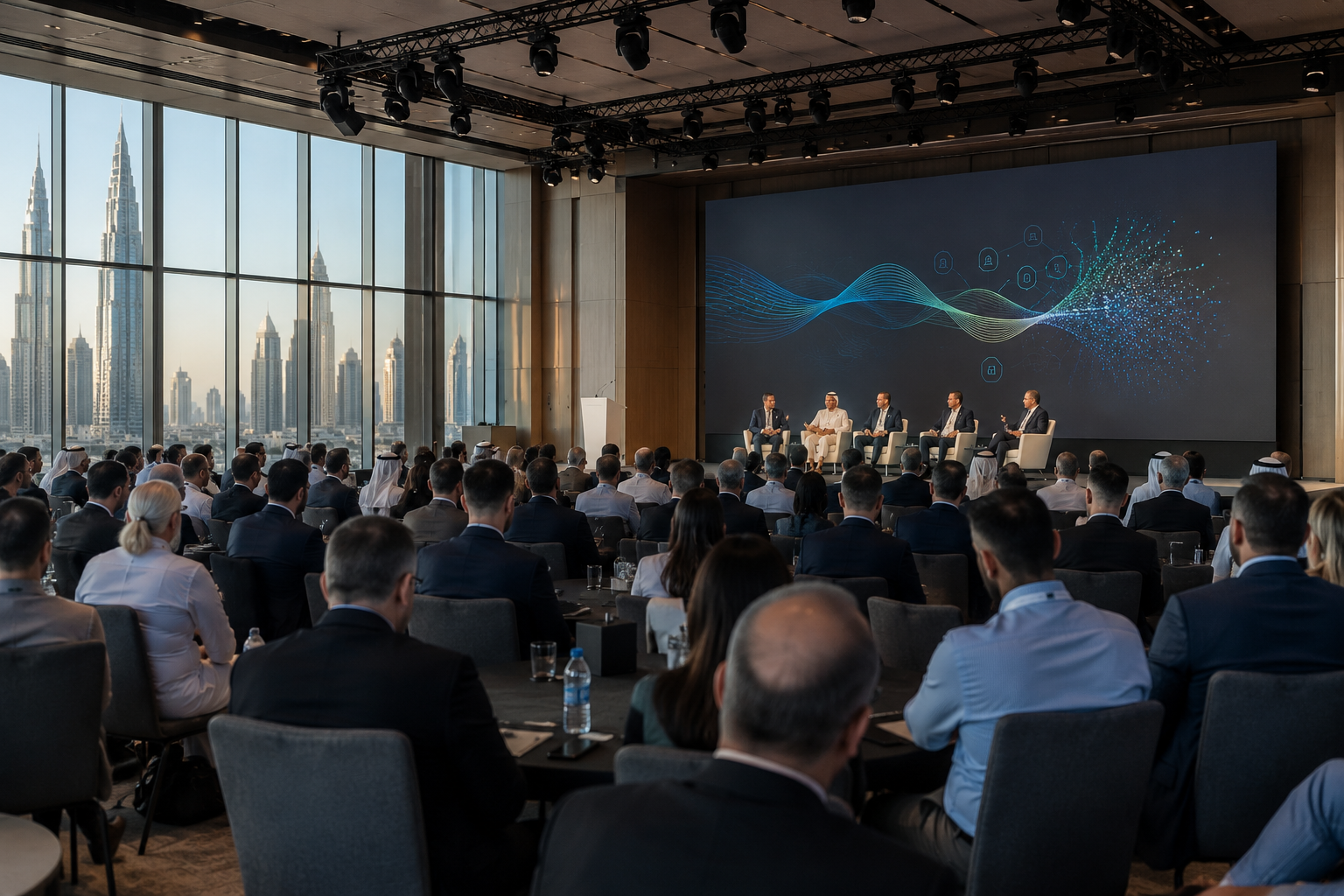
TechPulse MEA 2026, the inaugural technology forum hosted by the Indian Business and Professional Council in Dubai, brought together senior technology leaders to examine how artificial intelligence is reshaping enterprise strategy across the Middle East over the next fifteen months. The event's central message was that AI in the region has stopped being an experiment. Aditi Nitin, senior partner for data and AI at Deloitte Middle East, opened proceedings by citing research showing that seventy per cent of professionals in the UAE now use AI daily, compared with an eighteen per cent global average, a gap that puts the UAE among the fastest enterprise AI adopters anywhere.
That pace of adoption, Nitin argued, only translates into sustainable value when it is matched by governance. She set out practical models organisations are using to close that gap, including structured ninety day implementation roadmaps, enterprise AI copilots and AI native workflows, while flagging data privacy, hallucination risk and algorithmic bias as the issues that still trip up otherwise well resourced deployments, a concern that echoes the same governance questions raised around the US UAE AI acceleration partnership for enterprise adoption across the Gulf.
Governance, Not Technology, Is the Bottleneck
The panel discussion that followed, moderated by Sameer Makhija of Octave and featuring IBM's Asli Erbas, Planview's Stephen Fernandes and board advisor Ranjit Rajan, pushed the governance theme further. Panellists agreed that as organisations begin managing hybrid workforces of employees and AI agents working alongside one another, strong governance and clear executive accountability become the deciding factor in whether AI delivers measurable business outcomes or simply adds operational risk.
Resilient digital infrastructure, cybersecurity and supply chain resilience were named as parallel priorities, with panellists cautioning that sustainable returns depend on trusted data and disciplined governance rather than technology adoption alone. Boards, they argued, will increasingly be judged on whether the AI systems under their oversight remain transparent and auditable.
What It Means for the Wider Region
Closing the event, Santosh Varghese pointed to projections that AI could contribute between ninety six billion and one hundred billion US dollars to the UAE economy by 2030, a figure that underlines why AI governance has become a boardroom priority well beyond the technology function itself. For enterprise leaders elsewhere in the Gulf tracking how AI investment and summit activity is accelerating regionally, including plans for the UAE to host a major AI summit in 2028, the message from TechPulse MEA 2026 was consistent: the organisations that win from AI will be the ones that treat governance as core infrastructure, not an afterthought bolted on once systems are already live.
Frequently Asked Questions
What is TechPulse MEA 2026?
TechPulse MEA 2026 is an inaugural technology forum hosted by IBPC Dubai, bringing together senior technology leaders to discuss AI, governance and digital innovation trends across the Middle East.
How many UAE professionals use AI daily?
According to Deloitte Middle East, 70 percent of UAE professionals use AI daily, compared with an 18 percent global average.
What did panellists identify as the biggest AI adoption risk?
Panellists pointed to weak governance, untrusted data and lack of executive accountability as bigger risks than the underlying technology itself.
How much could AI contribute to the UAE economy?
Projections cited at the event estimate AI could contribute between 96 billion and 100 billion US dollars to the UAE economy by 2030.
Related Articles
UAE's $30B Stargate AI Campus Gets a Wartime Redesign
The UAE is restructuring its flagship $30 billion Stargate AI campus from a single 26-square-kilometre site into a distributed network of hardened facilities, after drone and missile strikes damaged AWS data centres in the UAE and Bahrain during the regional conflict.
Sep 15, 2026
IntelligenceSaudi Arabia Sets Out 14GW AI Computing Ambition, Using Groq as the Model to Scale
Saudi Arabia is working with the private sector to build more than 14 gigawatts of AI computing capacity, Communications Minister Abdullah Al Swaha said in Silicon Valley, framing the Kingdom's pitch to global AI companies around compute, capital and customer access, with Groq held up as proof the model already works.
Sep 14, 2026
IntelligenceDubai Police's New AI Shift Management System Is Built to Scale Across All of Dubai Government
Dubai Police and Digital Dubai have launched an AI-Assisted Shift Management System that matches staff skills to operational needs in real time, built on the government's shared GRP infrastructure and designed from the outset to expand across all of Dubai's government entities.
Sep 11, 2026
IntelligenceVodafone, Cassava and Elsewedy Electric to Build Egypt's First Sovereign AI Data Centre
Vodafone Business, Cassava Technologies and Elsewedy Electric have signed an agreement to build Africa Data Centers Egypt, including the country's first sovereign AI data centre powered by Nvidia GPUs, targeting up to $1 billion in investment upon completion.
Sep 10, 2026
IntelligenceHP's Four-Front Bet on Saudi Arabia: Manufacturing, R&D, Talent and Startups
HP's Riyadh plant is now shipping devices commercially, while its AI R&D centre, AgentOne, FlowMaster, and Garage 2.0 push the company from vendor to builder inside Saudi Arabia's Vision 2030 economy.
Sep 9, 2026