Pizza Hut's AI system caused 'cascading' problems and $100M in damages, franchisee alleges in new suit
Pizza Hut's mandated AI delivery platform Dragontail allegedly caused cascading operational failures across 111 franchise locations, wiping out over $100 million in enterprise value. A critical case study for GCC enterprises adopting AI across partner networks.
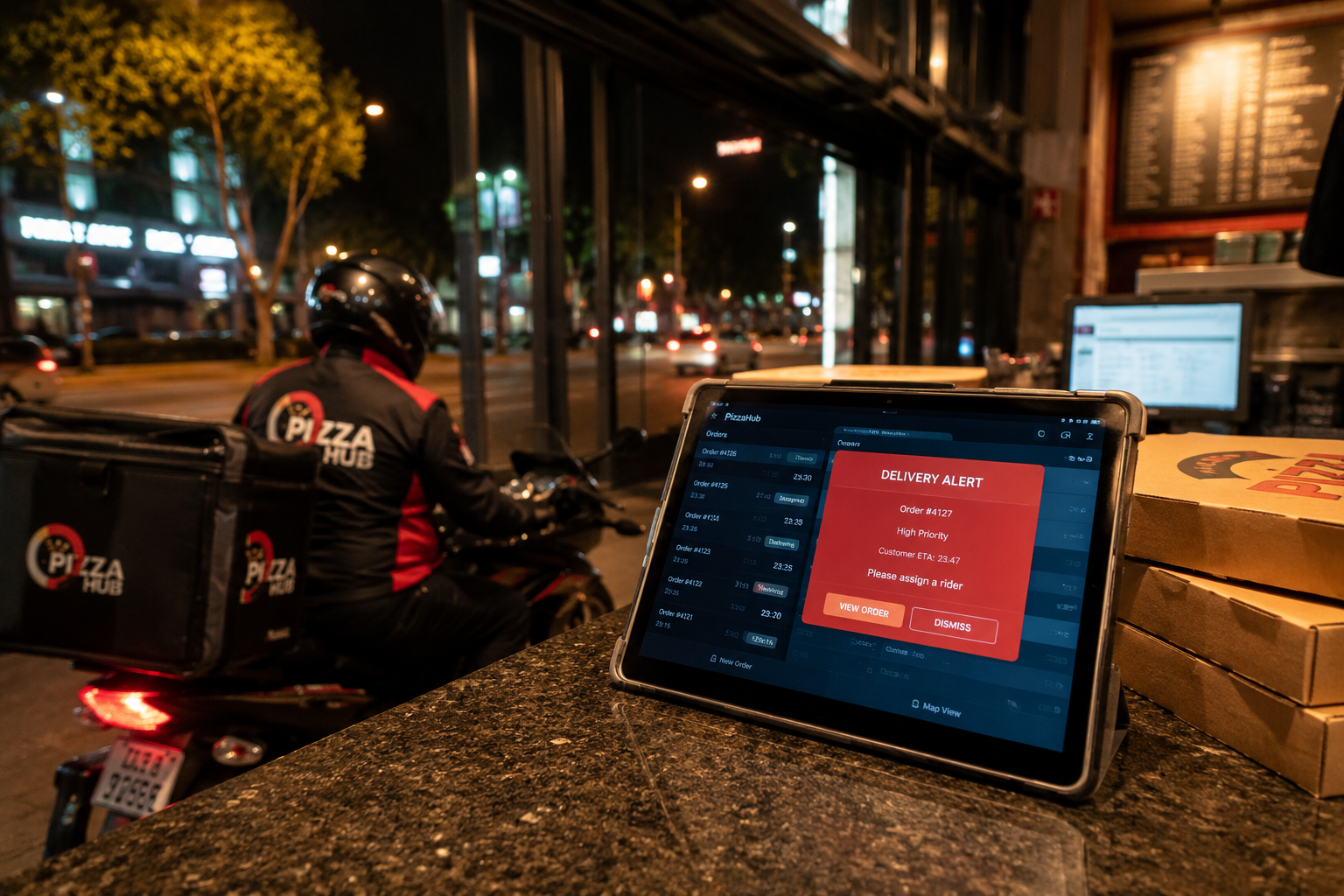
Key Takeaways
- ▸Pizza Hut's Dragontail AI caused a swing from +10.19% to -9.78% sales growth in key US markets after mandatory rollout
- ▸The failure was caused by excessive data transparency given to third-party DoorDash drivers with misaligned financial incentives, not a software bug
- ▸Drivers used real-time kitchen visibility to batch orders, leaving food on warming racks for up to 15 minutes, degrading quality
- ▸Franchisee Chaac Pizza Northeast filed a $100M lawsuit alleging breach of good faith and failure to adapt the platform to its third-party delivery model
- ▸GCC enterprises deploying AI across franchise or partner networks must stress-test models against actual third-party incentive structures before mandatory rollout
The Algorithmic Breakdown: Analyzing the $100M Systemic Failure of Pizza Hut's AI Delivery Rollout
The promise of artificial intelligence in corporate logistics is rooted in the optimization of efficiency, resource allocation, and predictive modeling. However, when an algorithmic system is deployed without accounting for the misaligned incentives of third-party stakeholders, the results can be catastrophic.
A stark illustration of this risk materialized in a major lawsuit filed in the Texas Business Court by Chaac Pizza Northeast, one of Pizza Hut's premier franchisees operating approximately 111 locations across New York, New Jersey, Maryland, Washington, D.C., and Pennsylvania. The lawsuit alleges that Pizza Hut's mandated rollout of Dragontail, an AI-powered delivery-management platform, triggered "cascading operational breakdowns," destroying over $100 million in enterprise value and consumer goodwill.
This research article analyzes the mechanics of the Dragontail system, the systemic vulnerabilities exploited by the platform's integration, and the broader corporate governance implications for parent company Yum! Brands.
The Pre-AI Baseline vs. Post-Rollout Reality
Prior to the integration of Dragontail, Chaac Pizza operated as a high-performing outlier within the Pizza Hut ecosystem. Utilizing traditional, localized dispatching and delivery methods, the franchisee maintained exemplary operational metrics.
- Delivery Velocity: Over 90% of pizza deliveries were successfully completed within a strict 30-minute window.
- Financial Health: The company consistently registered double-digit year-over-year sales growth.
- Customer Retention: Guest-satisfaction metrics routinely outperformed system-wide averages.
Following Pizza Hut's 2024 mandate forcing stores to adopt Dragontail, these metrics collapsed. In key metropolitan markets like New York City, year-over-year sales growth experienced a massive swing, plummeting from a positive 10.19% to a negative 9.78%.
Anatomy of an Operational Cascade: The DoorDash Exploit
The core failure of the Dragontail implementation did not stem from a software glitch, but from an architectural vulnerability: excessive data transparency provided to unaligned third-party actors. Dragontail was designed to optimise food delivery by automating dispatching and giving delivery drivers real-time visibility into kitchen workflows. However, because Chaac relied heavily on DoorDash drivers rather than internal, W-2 delivery employees, the optimisation algorithm encountered a hostile incentive structure.
The Batching Delay Mechanics: When DoorDash drivers were granted virtual visibility into the kitchen systems, they could see precisely when specific pizzas were scheduled to exit the oven. Rather than arriving to pick up a single completed order and delivering it immediately, drivers utilised this data to gamify their earnings.
A driver accepts Order A and views the real-time oven schedule. The driver notices Order B will exit the oven in 12 to 15 minutes. Instead of securing Order A and departing, the driver waits at the restaurant for up to 15 minutes for Order B to bake. Order A sits on the warming racks, severely degrading in food quality, temperature, and freshness.
Consequently, what Dragontail viewed as efficiency resulted in localised logistics bottlenecks, cold food, late arrivals, and a swift drop in customer retention.
Tip Transparency and Delivery Filtering: The Dragontail platform allegedly exposed tip amounts and payment methods to incoming Dashers before acceptance. In gig-economy logistics, data transparency regarding compensation leads to cherry-picking. Drivers actively rejected low-tip or cash orders, leaving specific deliveries stranded in the kitchen, further exacerbating fulfilment delays and customer dissatisfaction.
The Franchise Friction: Legal and Governance Breaches
The legal architecture of the lawsuit rests on a breach of the implied covenant of good faith and fair dealing inherent in franchise agreements. Chaac Pizza alleges that Pizza Hut leadership failed to exercise reasonable business judgment on three distinct fronts.
Inflexible Mandates: Pizza Hut mandated the software globally without adjusting for regional operational models, specifically Chaac's structural reliance on third-party gig networks rather than an in-house delivery fleet.
Training and Support Deficits: The complaint alleges that Pizza Hut failed to adequately train operators to mitigate the platform's vulnerabilities and ignored repeated requests for technical support.
Data Blindness: Despite clear, plunging sales metrics and deteriorating delivery times across major markets, corporate leadership allegedly refused to modify or pause the system.
Macroeconomics: Yum! Brands and the Pressure on Pizza Hut
The $100 million litigation arrives at a time of severe corporate vulnerability for Pizza Hut's parent company, Yum! Brands. The brand has been caught in a multi-quarter contraction, characterised by consecutive declines in domestic same-store sales.
The friction highlighted by the Chaac lawsuit exposes a deeper strategic crisis. While Yum! Brands has aggressively pushed automation, AI integration, and digital transformation to lean out store-level labour, the execution has alienated top-tier operators. The brand's inability to stabilise its domestic business recently forced Yum! Brands to announce it was exploring strategic alternatives for Pizza Hut, including a potential divestiture or outright sale of the brand.
Conclusion: Lessons for the Automated Enterprise
The Pizza Hut-Dragontail fallout serves as a case study for the limitations of automated optimisation. When designing AI systems for logistical workflows, developers and corporate strategists must remember that algorithms do not operate in a vacuum. An optimisation model that assumes all operators are compliant, internal employees will fail when exposed to independent contract workers motivated entirely by micro-incentives. Until enterprise AI platforms can dynamically model human behaviour and external economic incentives, forced technology rollouts risk breaking the very operational success they were built to enhance.
Related Articles
Everyone Expects Two AI Blocs. The Gulf Is Betting It Doesn't Have to Choose
Saudi Arabia is simultaneously the deepest US AI partner in the Gulf and the home of a sovereign AI company that just built its flagship Arabic model on Chinese architecture, and according to a new analysis, that isn't a contradiction, it's the point.
Sep 16, 2026
AnalysisHumain and G42 Look to Raise Outside Capital as Gulf AI Giants Weigh IPOs
Saudi Arabia's Humain and Abu Dhabi's G42 are both exploring outside capital and potential IPOs as their AI ambitions scale beyond sovereign funding alone.
Sep 8, 2026
AnalysisDubai Police Deploy 36 AI Robots, Complete 104 Technology Projects
Dubai Police has deployed 36 RPA robots and completed 104 technology projects over the past year as it expands AI across policing and administrative operations.
Sep 7, 2026
AnalysisDubai Chambers Launches Agentic AI Training for 14,000 Member Companies
Dubai Chambers has launched specialised Agentic AI training tracks through a new e-learning platform, aiming to equip more than 14,000 member companies with the skills to adopt the technology across their operations.
Sep 2, 2026
AnalysisHumain and DataVolt Partner for 100MW AI Data Centre on Saudi Arabia's Red Sea Coast
Saudi AI firm Humain has partnered with DataVolt to build a 100MW data centre at Oxagon, NEOM, the first phase of a larger 1.5 gigawatt AI campus.
Sep 2, 2026