Japan's Noetra Bets on Physical AI as Its "Last Chance" to Compete in Global AI Infrastructure Race
Noetra, a government backed Japanese company building a foundational model for physical AI and robotics, is being described by its CEO as Japan's last real opportunity to secure a domestic position in the global AI infrastructure race, backed by over 2.3 billion dollars in first year government funding.
Key Takeaways
- ▸Noetra has secured over 2.33 billion dollars in first year Japanese government funding for physical AI infrastructure
- ▸The project procures 27,500 Nvidia Rubin chips with operations targeted to begin in June 2028
- ▸Japan's approach contrasts with the Gulf's more compute acquisition focused sovereign AI strategy
- ▸The government aims to deploy 10 million AI enabled robots by 2040 as part of a broader demographic strategy
Noetra, the government backed Japanese company developing a foundational model for physical artificial intelligence and robotics, is nothing less than Japan's last real opportunity to secure a domestic position in the global AI infrastructure race, according to its chief executive.
"We've been able to bring together people who have been working on AI in Japan," Hironobu Tamba, Noetra's CEO, said in an interview. "Honestly, I think this may be our last chance," he added, framing the stakes in stark terms against the scale of investment already committed by China and the United States. Tamba is also an executive at SoftBank, one of the roughly 44 companies backing the project alongside Honda and Sony, and his framing reflects a genuine anxiety running through Japan's broader industrial policy establishment: that the country risks becoming a permanent buyer of foreign AI capability rather than a producer of its own, unless a coordinated national effort closes the gap now.
A national investment matched to the scale of the ambition
The numbers behind that ambition are substantial even by the standards of national AI infrastructure projects elsewhere. Noetra is backed by more than 380 billion yen, roughly 2.33 billion dollars, in government funding for its first year alone, procuring 27,500 Nvidia Rubin chips as the compute backbone for the project. Construction on the physical AI infrastructure is planned to begin in April 2027, with operations targeted to start in June 2028. The stated purpose is narrower and more industrial than the general purpose foundation models most enterprises are already familiar with: Noetra intends to give Japanese companies access to a reliable, self managed foundational model specifically built for physical AI and robotics applications, where data control and domestic reliability matter as much as raw model capability.
Robotics as demographic strategy, not just industrial policy
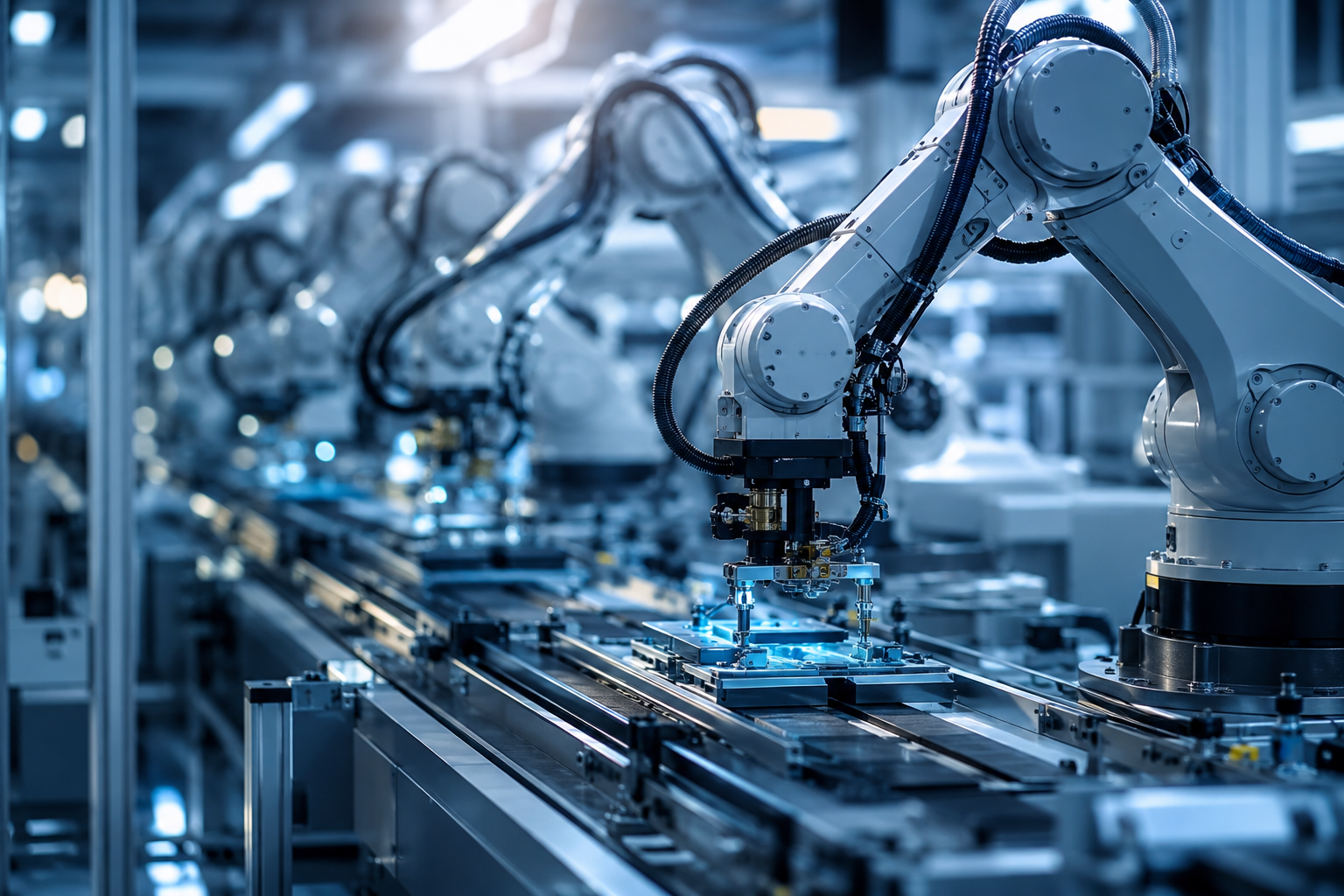
That framing connects directly to Prime Minister Sanae Takaichi's broader industrial strategy, which is simultaneously backing chip foundry venture Rapidus as it works to establish domestic cutting edge semiconductor manufacturing. The government's stated target is deploying 10 million AI enabled robots across manufacturing, shipbuilding, and nursing care by 2040, a goal that treats robotics not as a single sector to develop but as a labour and demographic strategy in its own right, particularly relevant given Japan's ageing workforce and persistent labour shortages in physically demanding industries. This kind of large scale, physical infrastructure focused national AI bet is not unique to Japan. It mirrors, in structure if not in sector, how AI and nuclear power are converging in national infrastructure strategy elsewhere, where governments are using AI to accelerate the deployment of large physical assets rather than confining AI investment purely to software and data services.
A different model from the Gulf's compute acquisition approach
For Gulf observers tracking sovereign AI infrastructure strategy, Noetra is a useful data point precisely because it takes a different shape from the compute first model more commonly seen in the region's own announcements. Where a significant share of Gulf capital has flowed into acquiring stakes in overseas AI infrastructure, illustrated recently by the Kuwait Investment Authority joining a ten billion dollar digital infrastructure venture with Nvidia and KKR, and by the UAE's MGX pursuing a twenty billion dollar acquisition of DayOne to control AI data centre capacity across Asia, Noetra represents a government coordinating a purely domestic industrial base toward a single national model, funded primarily through direct state investment rather than sovereign wealth fund deal making abroad.
That distinction matters for how the two regions are likely to build resilience into their respective AI strategies over time. The Gulf's approach, treating infrastructure resilience and energy self sufficiency as inseparable from digital sovereignty, has generally paired sovereign capital with international compute acquisition, while Japan's Noetra project bets instead on building sovereign model capability from a domestic industrial base outward, a strategic choice that trades the speed of acquiring existing infrastructure abroad for the slower, potentially more durable path of developing indigenous capability.
A chip supply chain no government fully controls
The chip dependency underlying Noetra's plans is itself worth watching closely. Nvidia has separately committed to spending 150 billion dollars annually in Taiwan, with Jensen Huang describing the island as the epicentre of the current AI buildout, which underscores just how concentrated the physical supply chain behind projects like Noetra's remains, even as governments across Asia and the Gulf alike attempt to build sovereign capability on top of it. That same dependency has pushed some Gulf entities toward developing domestic chip production rather than remaining reliant on externally sourced hardware indefinitely, a parallel worth noting given that Japan's own strategy pairs Noetra's model ambitions with Rapidus's domestic semiconductor manufacturing push rather than treating chip supply as an externally solved problem.
Execution, not funding scale, will determine whether this closes the gap
Whether Noetra succeeds in closing the gap Tamba describes will depend heavily on execution over the next several years rather than the scale of the initial funding commitment alone. Construction has not yet begun, operations remain more than eighteen months away, and the project's ultimate value to Japanese enterprises will only become clear once the promised model access actually reaches the companies it is meant to serve. That execution risk is not merely a Japanese concern either. It echoes a broader question already shadowing AI infrastructure spending globally, since the entire industry faces mounting pressure to prove a genuine return on the scale of capital being deployed rather than treating headline funding figures as evidence of success in themselves. What is already clear is the tone coming from the top of the project: this is being treated internally not as one bet among several, but as something closer to a final opportunity to establish Japanese relevance in a technology race that much of the rest of Asia, and the Gulf alongside it, is already running at full speed.
Frequently Asked Questions
How much government funding has Noetra received?
Noetra is backed by more than 380 billion yen, roughly 2.33 billion dollars, in government funding for its first year alone, funding the procurement of 27,500 Nvidia Rubin chips.
How does Noetra's strategy differ from the Gulf's approach to sovereign AI?
Noetra represents a government coordinating a purely domestic industrial base toward a single national model funded through direct state investment, whereas Gulf capital has more commonly flowed into acquiring stakes in overseas AI infrastructure.
What is the broader goal behind Japan's physical AI and robotics push?
The government aims to deploy 10 million AI enabled robots across manufacturing, shipbuilding, and nursing care by 2040, treating robotics as a labour and demographic strategy given Japan's ageing workforce.
Related Articles
Dubai Chambers Launches Agentic AI Training for 14,000 Member Companies
Dubai Chambers has launched specialised Agentic AI training tracks through a new e-learning platform, aiming to equip more than 14,000 member companies with the skills to adopt the technology across their operations.
Sep 2, 2026
AnalysisHumain and DataVolt Partner for 100MW AI Data Centre on Saudi Arabia's Red Sea Coast
Saudi AI firm Humain has partnered with DataVolt to build a 100MW data centre at Oxagon, NEOM, the first phase of a larger 1.5 gigawatt AI campus.
Sep 2, 2026
AnalysisUAE Banks Federation Chief: Agentic AI Is Banking's Next Phase, But Accountability Must Stay Human
UAE Banks Federation Director General Jamal Saleh argues agentic AI will define banking's next phase, pointing to the UAE's regulatory model as a template for the region, though one figure he cites needs context.
Aug 28, 2026
AnalysisDubai Chambers Signs Agentic AI Agreement with India's NASSCOM to Accelerate Private-Sector Adoption
Dubai Chambers has signed a preliminary agreement with India's NASSCOM to accelerate agentic AI adoption among private-sector companies in the UAE.
Aug 20, 2026
AnalysisAbu Dhabi's AIREV Partners with Qualcomm to Expand Sovereign Agentic AI Deployment
Abu Dhabi's AIREV has partnered with Qualcomm to integrate its autonomous AI platform with Qualcomm Dragonwing hardware, enabling sovereign AI deployment.
Aug 14, 2026