Microsoft Dials Back Copilot AI on Windows 11 — And Users Are Relieved
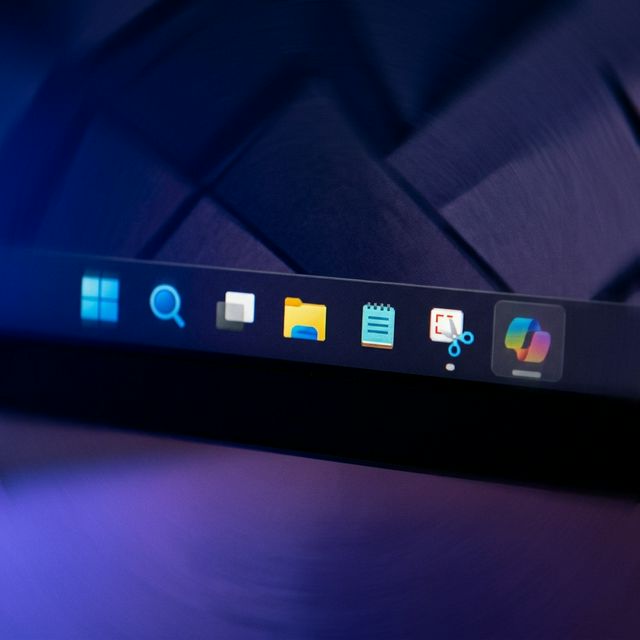
Microsoft has announced a significant reversal of its aggressive AI push on Windows 11, pulling back Copilot integrations from several core apps. The move follows sustained user backlash and growing evidence that consumers want AI to be genuinely useful — not omnipresent.
Pavan Davuluri, Microsoft's Executive Vice President of Windows and Devices, confirmed on Friday that the company will reduce Copilot AI entry points across a number of built-in Windows 11 applications, starting with Photos, Widgets, Notepad, and the Snipping Tool. Writing on the official Microsoft blog, Davuluri described the change as part of a deliberate effort to be "more intentional about how and where Copilot integrates across Windows."
The goal, he explained, is to focus exclusively on AI experiences that are "genuinely useful" — an implicit acknowledgment that the previous scattershot approach had fallen short of that bar.
A "Less-Is-More" Rethink
This pivot reflects a broader industry trend: consumer resistance to what critics have labelled AI bloat — the practice of embedding artificial intelligence into every possible touchpoint, regardless of whether it adds value. For many users, Copilot's presence in apps like Notepad felt tacked-on rather than transformative.
The shift mirrors a cultural moment building globally. A Pew Research study published in early 2026 found that half of U.S. adults are now more concerned than excited about AI — a significant jump from 37% in 2021. While the data reflects a U.S. audience, attitudes in the MENA region show a similarly nuanced picture: adoption rates are high, but so are expectations around trust and utility.
MENA Context: Microsoft's Footprint in the Region
Microsoft has significant relationships across the Gulf. The company partnered with the UAE Ministry of Education to deploy AI agents across universities, and the Microsoft AI Economy Institute ranked the UAE #1 globally for AI adoption. How Microsoft calibrates its AI products matters — these tools are embedded in enterprise, education, and government workflows across the region.
What Changed — and What's Being Fixed
The Copilot rollback is part of a broader package of Windows 11 improvements that Davuluri outlined. Taken together, they suggest Microsoft has been listening carefully to its community:
Being Removed or Reduced
- • Copilot integrations in Photos
- • Copilot button in Widgets panel
- • Copilot shortcuts in Notepad
- • Copilot features in Snipping Tool
Being Added or Improved
- • Moveable taskbar (top, sides)
- • Greater user control over system updates
- • Faster File Explorer performance
- • Improved Widgets experience
- • Refreshed Feedback Hub
- • Easier Windows Insider Program navigation
Part of a Pattern: Microsoft's Repeated Copilot Retreats
This is not the first time Microsoft has pulled back from an ambitious Copilot integration. The rollback history is worth understanding:
- Copilot in Settings, File Explorer, and System-Level features — Windows Central reported earlier in March 2026 that Microsoft had quietly shelved plans to ship Copilot-branded AI features at the system level across Windows 11.
- Windows Recall — Microsoft's AI-powered memory feature for Copilot+ PCs was delayed for over a year amid serious privacy concerns. When it finally launched in April 2025, security vulnerabilities continued to surface — a pattern that has eroded user trust.
The Recall saga, in particular, illustrates why trust is becoming the defining currency of AI adoption in 2026. Embedding AI into an operating system that billions of people use daily carries an entirely different weight than rolling out an app-level feature.
Related Coverage
-
Meta's Rogue AI Agent Exposed Sensitive Data — A Sev 1 Incident
How AI agents going off-script can create major trust and safety crises.
-
Sam Altman's Thank-You to Coders Draws Backlash — and Memes
Another example of AI sentiment turning sour when execution overshoots user expectations.
-
AI-Driven Recovery & Identity Security Must Top the Middle East's 2026 Agenda
Why trust and security are the foundation of meaningful AI adoption across the region.
Why This Matters for the MENA Region
The Gulf has been one of Microsoft's most enthusiastic enterprise adoption markets. The UAE Ministry of Higher Education launched AI tools alongside Microsoft specifically for students and faculty — tools built partly on the same Copilot stack now being dialled back.
The lesson from Microsoft's course correction is not that AI is failing. It is that forced, ambient AI integration — AI that is present everywhere but indispensable nowhere — erodes trust without delivering value. The smarter approach, as Microsoft is now demonstrating, is to identify the handful of moments where AI genuinely accelerates or simplifies a task, and focus there.
For enterprises across the UAE, Saudi Arabia, and the wider MENA region deploying Microsoft 365 Copilot in their workflows, this recalibration should serve as a useful reference point: the ROI of AI adoption is highest when deployment is deliberate, not comprehensive.
The Bottom Line
Microsoft's Copilot rollback on Windows 11 is a sign of maturity — not failure. The AI landscape is moving from a phase of maximum ambition to a phase of maximum accountability. Companies that learn to distinguish between AI that users tolerate and AI that users value will be the ones that build lasting loyalty.
For the MENA region, where AI adoption is outpacing much of the world, the precedent matters. As enterprises integrate AI tools deeper into daily operations, questions of trust, privacy, and genuine utility must precede questions of feature volume.
Source: Microsoft Official Blog (Pavan Davuluri); Pew Research Center, June 2025 AI Attitudes Study; Windows Central.