Sam Altman's Thank-You to Coders Draws Backlash — and Memes
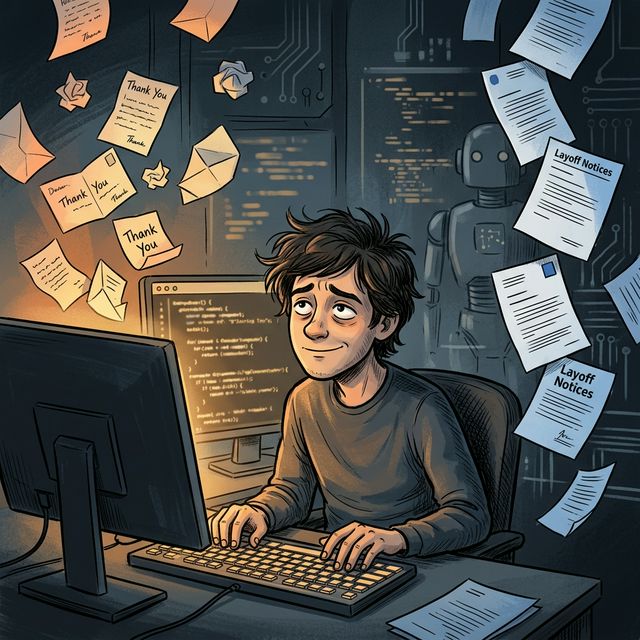
OpenAI CEO Sam Altman posted a heartfelt thank-you to the developers whose work built the software foundation that AI now learns from. The timing could not have been worse. Within the same week, Amazon laid off 16,000 workers, Block cut nearly half its workforce, Atlassian reduced headcount by 10%, and Meta was reportedly eyeing another large round of cuts — all citing AI-driven efficiency. The internet's response was swift, sharp, and darkly funny.
The post that sparked the reaction was brief and apparently sincere. Altman wrote on X: "I have so much gratitude to people who wrote extremely complex software character-by-character. It already feels difficult to remember how much effort it really took. Thank you for getting us to this point."
Read in isolation, it sounds generous. Read in the context of an industry-wide wave of tech layoffs being justified in part by the same AI productivity gains that OpenAI has championed, it landed very differently.
Why the Timing Stings
The structural irony is hard to miss. OpenAI built its models — in significant part — by training on the code written by the very developer community Altman was thanking. That code, produced by generations of engineers at considerable skill and effort, became training data that now enables AI to write comparable code automatically. The craft that Altman described as difficult to remember is not just nostalgic history — it is actively being cited as a reason why companies need fewer human engineers going forward.
Altman's post implies that developers' hard-won expertise has now been largely automated — that the difficult work is over, and the machine can take it from here. At precisely the moment when thousands of those same developers are being told their roles have been made redundant, the sentiment reads less like gratitude and more like a retirement speech for a profession that didn't volunteer to retire.
The Internet Responds
Thousands of replies poured in. Some were angry. "You're welcome. Nice to know that our reward is our jobs being taken away." But the majority of the internet did what it does best: channeled genuine frustration into comedy.
"Sam's eulogy for software engineers"
"It's times like this when I really miss the Sam Altman parody account"
"Dear devs, You will lose your jobs forever and be forced to work in the coal mines. But you can rest easy knowing Sam Altman is grateful. ❤️ 🙏"
"Billion dollar app idea: AI that reads billionaire tweets before they post them and says 'this is going to make you sound incredibly out of touch, are you sure?'"
"This reads like something the Mayans would say right before the ceremony starts."
The Deeper Question for the Tech Industry
Beneath the memes lies a legitimate and urgent debate. The AI industry's trajectory — training models on human-generated data, then using those models to reduce the need for human labour — raises fundamental questions about who bears the cost of technological transitions and who captures the gains.
The historical precedent from previous automation waves (manufacturing, clerical work) suggests that job displacement is real, painful, and concentrated, while productivity gains are diffuse and slow to materialise as broad wage growth. The difference with AI is speed: the transition is happening in years, not decades, compressing adjustment time for individuals and institutions alike.
GCC Relevance
Developer job markets in the UAE and Saudi Arabia have been growing rapidly, with both countries actively competing for technical talent as part of their digital economy ambitions. The wave of Western tech layoffs attributed to AI is a leading indicator for MENA hiring managers and workforce planners. If junior developer roles worldwide compress due to AI code generation, the pipeline of talent entering the Gulf's tech sector will change structurally. For MENA universities and coding bootcamps already adjusting curricula toward AI-adjacent skills, this moment underscores the urgency. The question is not whether to teach people to code — it's what kind of coding and engineering skills remain distinctly valuable when AI handles the character-by-character work.
Sources: TechCrunch / X (formerly Twitter) — March 18, 2026