OECD Warns Hormuz Tensions Could Halt Gulf AI Infrastructure Plans
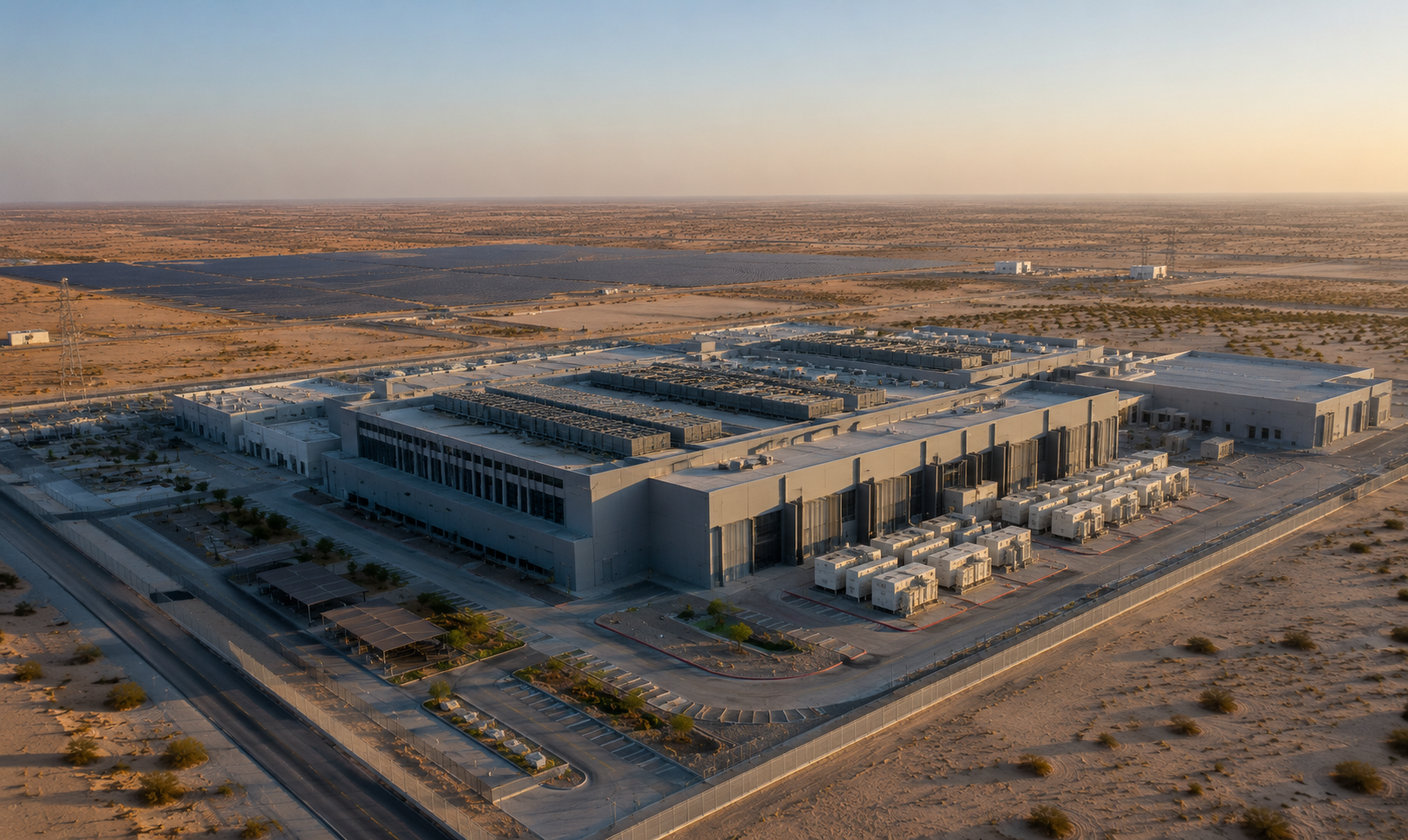
The OECD has warned that prolonged Strait of Hormuz disruption could delay or halt multi-gigawatt AI data centre projects across Saudi Arabia and the UAE. Higher energy costs, semiconductor supply risk, and physical infrastructure threats are compounding the challenge for Gulf AI ambitions.
Key Takeaways
- ▸OECD's June 2026 Economic Outlook warns Hormuz disruption could delay or halt Gulf AI infrastructure projects.
- ▸Three risk vectors: energy cost erosion, semiconductor supply chain disruption, physical attacks on data centre infrastructure.
- ▸Saudi Arabia and UAE projects represent tens of billions in planned AI compute capacity at risk.
- ▸Under the prolonged disruption scenario, global growth falls to 2.1% in 2026 and 1.8% in 2027.
- ▸Major operators including G42 and HUMAIN are maintaining investment commitments despite stretched timelines.
The Organisation for Economic Cooperation and Development has issued a formal warning that prolonged geopolitical tensions in the Gulf could delay or halt large-scale AI infrastructure projects across Saudi Arabia and the UAE. It is the first time a major multilateral economic body has directly linked Middle East conflict risk to the trajectory of global AI development. The warning appeared in the OECD's latest Economic Outlook, published on 7 June 2026, examining compounding effects of Strait of Hormuz disruption on energy markets, trade flows, and capital-intensive technology investment. The OECD's assessment is precise on the infrastructure risk. Large-scale AI projects in the region, including multi-gigawatt data centres and computing campuses, are closely linked to sovereign wealth funds and state-backed capital. Prolonged geopolitical tensions could delay or halt these projects entirely, affecting global AI inference capacity expansion and its geographic distribution. That is not a theoretical projection; it is a structural observation about where the capital for these facilities originates and what conditions it requires to deploy. Three distinct risk vectors are identified in the report. The first is energy cost. Gulf markets had previously offered industrial power at around $0.11 per kilowatt-hour, well below Western benchmarks, making the region attractive for energy-intensive data centre operations. That advantage has narrowed as oil price volatility and infrastructure repair costs place upward pressure on energy pricing even for large industrial users. The second is semiconductor supply. AI hardware manufacturing depends heavily on energy and petrochemical-intensive processes that draw on Gulf inputs, including helium used in semiconductor fabrication. Sustained disruption to those supply chains would increase hardware costs and compress the global compute build-out. The third risk is physical. Attacks on cloud infrastructure in the region this year, including strikes on data centre facilities in the UAE and Bahrain, demonstrated that these assets are now treated as strategic targets in ways that were not previously priced into investment underwriting. The OECD models two scenarios. In the base case, even a relatively swift resolution to current tensions would reduce global growth to 2.8 percent in 2026 from 3.4 percent in 2025. In the prolonged disruption scenario, where Gulf energy supplies remain constrained into the second half of 2027, global growth falls to 2.1 percent in 2026 and 1.8 percent in 2027, with disproportionate impact on growth industries dependent on compute infrastructure. The specific Gulf AI projects at stake are substantial. Saudi Arabia's Hexagon Data Centre in Riyadh is positioned as the world's largest government-owned AI facility at a development cost of $2.7 billion. The Microsoft Azure Saudi Arabia East cloud region is scheduled to launch later in 2026. The Neom project signed a $5 billion data centre deal targeting a 1.5 gigawatt first phase for 2028. In the UAE, the Stargate project with OpenAI targets a one-gigawatt supercomputing campus in Abu Dhabi. The major regional operators have maintained stated commitments. G42 has said its direction remains unchanged and its conviction has deepened. HUMAIN, the Saudi state-backed AI company, has said its ambitions extend beyond building data centres to building a complete AI stack. AWS stated in April that its excitement about the region remains as strong as ever. But investment timelines in practice are stretching. Pure Data Center Group temporarily paused investment decisions in the region earlier this year, and legal advisors note that risks which were previously unpriced, including physical attacks on infrastructure, are now being factored into deal structures. For enterprise technology teams evaluating cloud and AI infrastructure decisions in the region, the OECD report adds authoritative weight to a risk that has been building for months. The long-term case for Gulf AI infrastructure remains compelling. The question is whether the current period of uncertainty delays delivery by quarters or by years, and whether organisations dependent on Gulf-based compute should be reviewing contingency options now. The UAE's confirmed hosting of the 2028 AI Summit reflects the same long-term conviction, even as near-term infrastructure delivery faces genuine headwinds.
Frequently Asked Questions
What did the OECD warn about Gulf AI infrastructure?
In its June 2026 Economic Outlook, the OECD warned that prolonged Strait of Hormuz disruption could delay or halt large-scale AI data centre and computing projects in Saudi Arabia and the UAE, which are closely tied to sovereign wealth fund capital.
What are the three risk vectors the OECD identified?
Rising data centre energy costs as the Gulf's power price advantage erodes, semiconductor supply chain disruption tied to Gulf petrochemical inputs including helium, and physical infrastructure threats following drone strikes on cloud facilities in the UAE and Bahrain.
Which Gulf AI projects are most exposed?
Saudi Arabia's $2.7 billion Hexagon Data Centre, Microsoft Azure Saudi Arabia East, Neom's $5 billion data centre deal targeting 1.5GW by 2028, and the UAE's Stargate supercomputing campus targeting 1GW in Abu Dhabi.
What should Gulf enterprise technology teams do now?
Review timeline assumptions for projects dependent on Gulf-based cloud or compute infrastructure. The long-term investment case is intact but near-term delivery is subject to geopolitical conditions outside the control of the operators involved.
Related Articles
Dubai Police Deploy 36 AI Robots, Complete 104 Technology Projects
Dubai Police has deployed 36 RPA robots and completed 104 technology projects over the past year as it expands AI across policing and administrative operations.
Sep 7, 2026
AnalysisDubai Chambers Launches Agentic AI Training for 14,000 Member Companies
Dubai Chambers has launched specialised Agentic AI training tracks through a new e-learning platform, aiming to equip more than 14,000 member companies with the skills to adopt the technology across their operations.
Sep 2, 2026
AnalysisHumain and DataVolt Partner for 100MW AI Data Centre on Saudi Arabia's Red Sea Coast
Saudi AI firm Humain has partnered with DataVolt to build a 100MW data centre at Oxagon, NEOM, the first phase of a larger 1.5 gigawatt AI campus.
Sep 2, 2026
AnalysisUAE Banks Federation Chief: Agentic AI Is Banking's Next Phase, But Accountability Must Stay Human
UAE Banks Federation Director General Jamal Saleh argues agentic AI will define banking's next phase, pointing to the UAE's regulatory model as a template for the region, though one figure he cites needs context.
Aug 28, 2026
AnalysisDubai Chambers Signs Agentic AI Agreement with India's NASSCOM to Accelerate Private-Sector Adoption
Dubai Chambers has signed a preliminary agreement with India's NASSCOM to accelerate agentic AI adoption among private-sector companies in the UAE.
Aug 20, 2026