Gulf AI Infrastructure Investment Enters a New Geopolitical Reality
Gulf states have spent three years building some of the world's fastest growing AI infrastructure. Recent regional instability has added a new variable to that strategy, pushing governments and investors to treat digital infrastructure with the same strategic weight once reserved for energy assets.
Key Takeaways
- ▸Regional instability has pushed data centres and compute infrastructure into the same critical infrastructure category as energy and subsea connectivity
- ▸Gulf states are pairing domestic solar generation directly with data centre campuses to secure energy independence alongside digital sovereignty
- ▸Semiconductor availability and geopolitical tension are increasingly shaping AI infrastructure timelines independent of physical risk to any single facility
- ▸Cultural and linguistic sovereignty are becoming inseparable from technical sovereignty as Gulf states scrutinise AI models trained primarily on foreign data
- ▸Enterprise AI procurement is beginning to treat infrastructure resilience as a first order strategic question rather than a facilities level concern
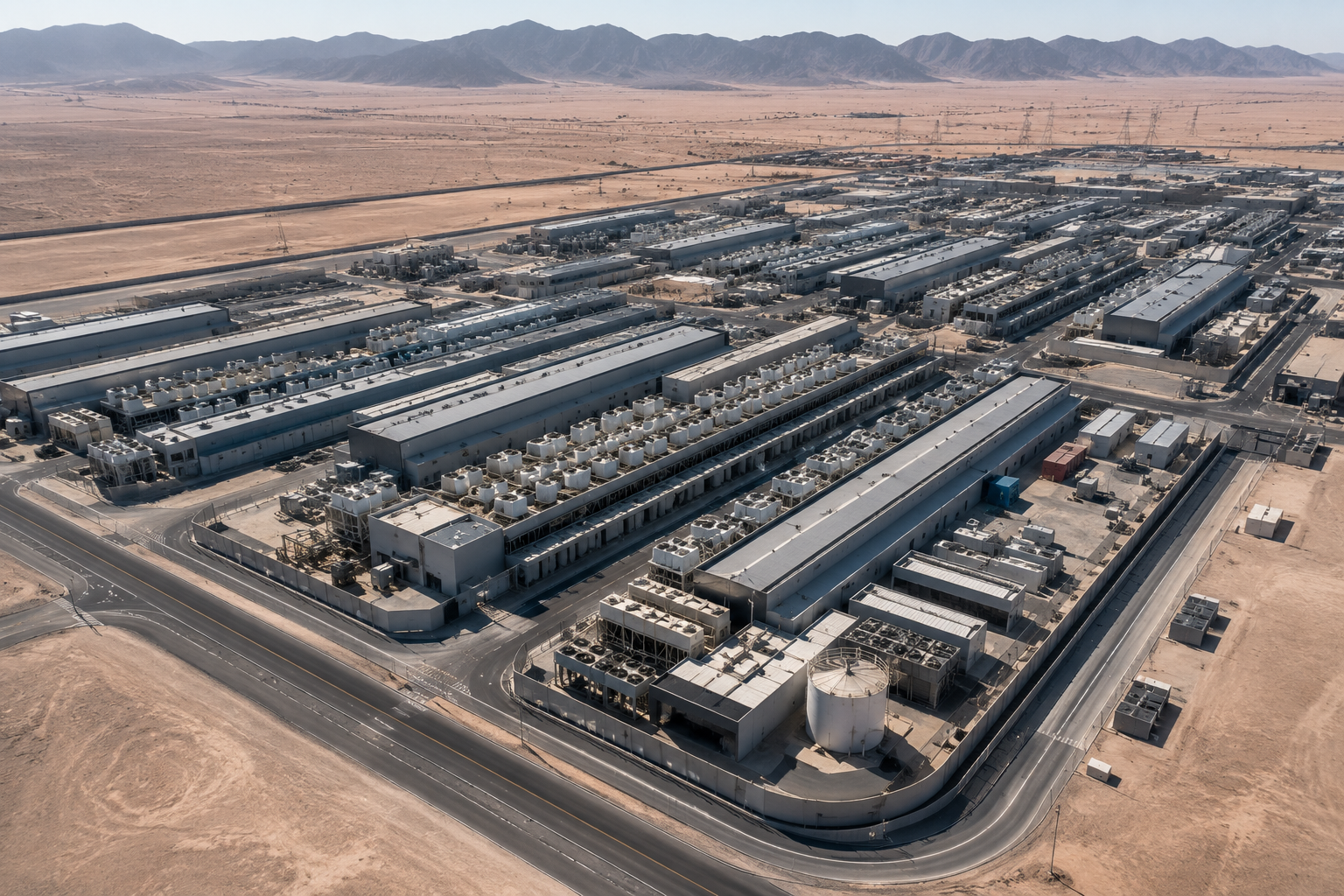
The Gulf has spent the past three years building one of the world's fastest growing artificial intelligence infrastructure ecosystems, backed by sovereign investment funds, national AI strategies, and hyperscale data centre projects designed to power the region's economic diversification. Recent regional instability has introduced a new variable into that strategy, and industry leaders are increasingly asking what happens to the Gulf's AI momentum if instability persists.
Data centres as a new category of critical infrastructure
Mehdi Paryavi, CEO and founder of the International Data Center Authority, put the shift plainly: data, cloud, and AI have become new critical resources, and data centres have become targets as a result. Historically, critical infrastructure protection across the Gulf Cooperation Council focused primarily on energy assets. That framing is now expanding to include physical infrastructure, energy systems, subsea connectivity, and the large scale compute facilities increasingly underpinning national economies, the kind of facility exemplified by Stargate UAE, the 5 gigawatt AI campus outside the United States now anchoring the UAE's national compute strategy. Paryavi's assessment reflects a broader change in how the region's advisory community talks about risk: the guidance that once discouraged building data centres near military installations is beginning to run in the other direction, as advisors now suggest keeping military installations away from data centres.
The response has been resilience, not retreat
Despite the added uncertainty, the region's long term ambitions remain intact. The Gulf continues positioning itself as an alternative digital hub at a moment when global technology supply chains are increasingly shaped by competition between major powers. Gulf nations are responding by investing heavily in domestic energy production alongside their compute buildout, including large scale solar generation sited directly next to data centre campuses. That pairing reduces dependence on imported fuel, insulates operations from global energy price shocks, and aligns with national diversification goals such as Saudi Arabia's Vision 2030. The underlying logic mirrors a similar push already underway in the region's nuclear sector, where AI assisted reactor design is being explored specifically to accelerate the kind of domestic, carbon free power generation that data centre operators are now racing to secure. Generating power domestically lets Gulf nations maintain control over their digital economy even if global energy markets become unstable, treating energy self sufficiency as inseparable from digital sovereignty.
A feedback loop between hardware, geopolitics, and engineering
The dynamics at play are genuinely layered. Regional tensions can affect semiconductor availability, which in turn shapes global AI development and infrastructure expansion timelines, independent of any physical risk to a specific facility, a vulnerability the region has been actively trying to engineer around through projects like the UAE's own 4 trillion transistor AI chip, developed to reduce reliance on external hardware supply chains. Even without geopolitical complications, building AI infrastructure in the Middle East carries its own engineering demands, since AI workloads require enormous computing power and generate proportionally enormous heat, pushing next generation data centres toward direct liquid cooling that brings coolant straight to processors rather than cooling entire rooms. As a result, AI infrastructure is increasingly being evaluated using the same resilience lens applied to power grids or financial clearing systems, infrastructure that must keep functioning through shocks rather than simply operate under normal conditions. Distributed compute architectures, designed so workloads can shift between regions and cloud zones, are one of the practical tools regional operators are leaning on to build that resilience.
Why digital sovereignty has moved to the centre of the conversation
The International Institute for Strategic Studies has framed the broader tension well: Gulf investment in AI has brought with it real jurisdictional, technological, and security related dependencies on the United States, a dynamic now highly visible in the region given the scale of its ambitions, and one that carries lessons for the more than fifty other countries globally pursuing similar AI strategies while trying to preserve genuine sovereignty. That tension extends beyond infrastructure and into the models themselves, since systems trained primarily on American or Chinese data embed cultural assumptions that can produce skewed outputs when deployed across societies with different social structures, a gap projects like Falcon, the UAE built large language model designed around deeper Arabic language comprehension and regional data privacy, were specifically created to close. This makes linguistic and cultural sovereignty inseparable from technical sovereignty for Gulf states integrating AI into education and public services. The scale of recent commitments illustrates how seriously governments are treating this: the Qatar Investment Authority has formed a national AI company alongside a data centre infrastructure joint venture with Brookfield reportedly worth in the tens of billions of dollars.
What this means for enterprise AI strategy in the region
For organisations building or procuring AI capability across the Gulf, the practical takeaway is that infrastructure resilience planning belongs alongside model selection and data governance as a first order strategic question, not an afterthought handled purely by facilities teams. Vendors and enterprises evaluating regional data centre partners should expect increasing scrutiny of physical resilience, energy independence, and jurisdictional exposure as procurement criteria, mirroring the same maturity curve that identity and recovery focused cybersecurity governance has already gone through across the Middle East over the past two years. The Gulf's AI ambitions have not been abandoned in the face of recent instability. They are being re-engineered around it.
Frequently Asked Questions
Why are Gulf states treating data centres as critical infrastructure?
Because AI, cloud, and data have become strategic economic resources, the physical facilities that house them are increasingly viewed with the same protective priority once reserved for energy assets.
How are Gulf nations responding to infrastructure resilience concerns?
By pairing data centre buildout with domestic renewable energy generation, pursuing distributed compute architectures, and treating digital sovereignty as inseparable from energy sovereignty.
What does digital sovereignty mean for AI deployment in the Gulf?
It spans jurisdictional control over data, technical independence from single foreign vendors, and cultural and linguistic considerations in how AI models are trained and deployed.
Related Articles
UAE Bets Its Global AI Ambitions on a Deepening Alliance With the Trump Administration
The UAE is positioning itself to become a global artificial intelligence powerhouse, betting that a deepening alliance with the Trump administration, anchored by a $30 billion, five gigawatt AI campus, will secure its place at the centre of the industry.
Sep 1, 2026
AnalysisUAE Banks Federation Chief: Agentic AI Is Banking's Next Phase, But Accountability Must Stay Human
UAE Banks Federation Director General Jamal Saleh argues agentic AI will define banking's next phase, pointing to the UAE's regulatory model as a template for the region, though one figure he cites needs context.
Aug 28, 2026
AnalysisDubai Chambers Signs Agentic AI Agreement with India's NASSCOM to Accelerate Private-Sector Adoption
Dubai Chambers has signed a preliminary agreement with India's NASSCOM to accelerate agentic AI adoption among private-sector companies in the UAE.
Aug 20, 2026
AnalysisAbu Dhabi's AIREV Partners with Qualcomm to Expand Sovereign Agentic AI Deployment
Abu Dhabi's AIREV has partnered with Qualcomm to integrate its autonomous AI platform with Qualcomm Dragonwing hardware, enabling sovereign AI deployment.
Aug 14, 2026
AnalysisWorld Bank Names UAE a Global AI Leader in Foundation Models and Talent
The World Bank's 2026 World Development Report names the UAE among a small group of countries building advanced foundation AI models from scratch.
Aug 11, 2026