Computational Sovereignty vs. Environmental Compliance: The UK's AI Energy Crisis
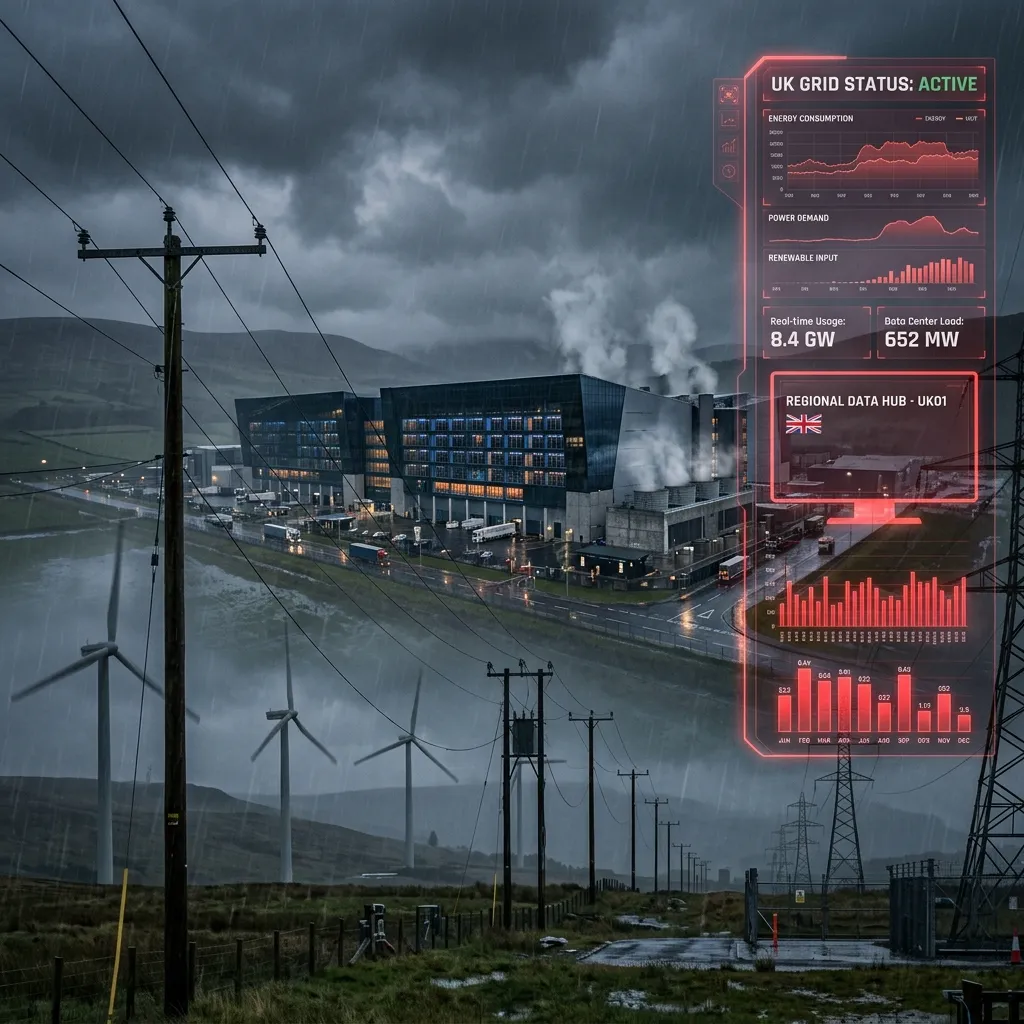
As the United Kingdom seeks to position itself as a global "AI Superpower," the infrastructural requirements are coming into direct conflict with national decarbonization mandates.
This article examines a significant statistical discrepancy between the Department of Science, Innovation and Technology (DSIT) and the Department of Energy Security and Net Zero (DESNZ). This energy dilemma is a preview of the challenges facing US-UAE AI partnerships and other global infrastructure roadmaps.
Introduction: The Dual-Vision Dilemma
The UK government is currently pursuing two potentially incompatible objectives: Technological Hegemony and Environmental Stewardship. This tension mirrors the sovereign hardware challenges being tackled in the Gulf, where energy-efficient AI is a key research priority.
Comparative Analysis of Energy Projections
| Department | Projected Energy Load | Context |
|---|---|---|
| DSIT | 6.0 GW | Minimum for "UK Compute Roadmap." |
| DESNZ | < 0.6 GW | Inferred from commercial sector growth. |
The Growth Zone Paradox
DSIT’s strategy involves "AI Growth Zones," each requiring ~500MW. Paradoxically, the total growth projected by DESNZ for the entire commercial sector is only 528MW. This hundredfold discrepancy underscores the volatility of AI impact modeling and suggests that initial policy frameworks may have significantly underestimated the environmental cost of digital scaling.
Critical Perspectives: Institutional Incompetence?
Academic observers propose two interpretations: Systemic Siloing (lack of communication between departments) and "Magical Thinking" (over-reliance on unproven future efficiencies). This lack of consensus could lead to energy shortages or a failure to meet international climate commitments.
Conclusion: The Infrastructure Bottleneck
The UK’s path to becoming an AI superpower is currently throttled by a fundamental planning gap. The upcoming "Carbon Budget 7" will serve as a critical litmus test for whether the UK can reconcile its computational ambitions with the physical realities of its energy grid.