China Announces New Global AI Governance Body as Xi Calls for International Cooperation Framework
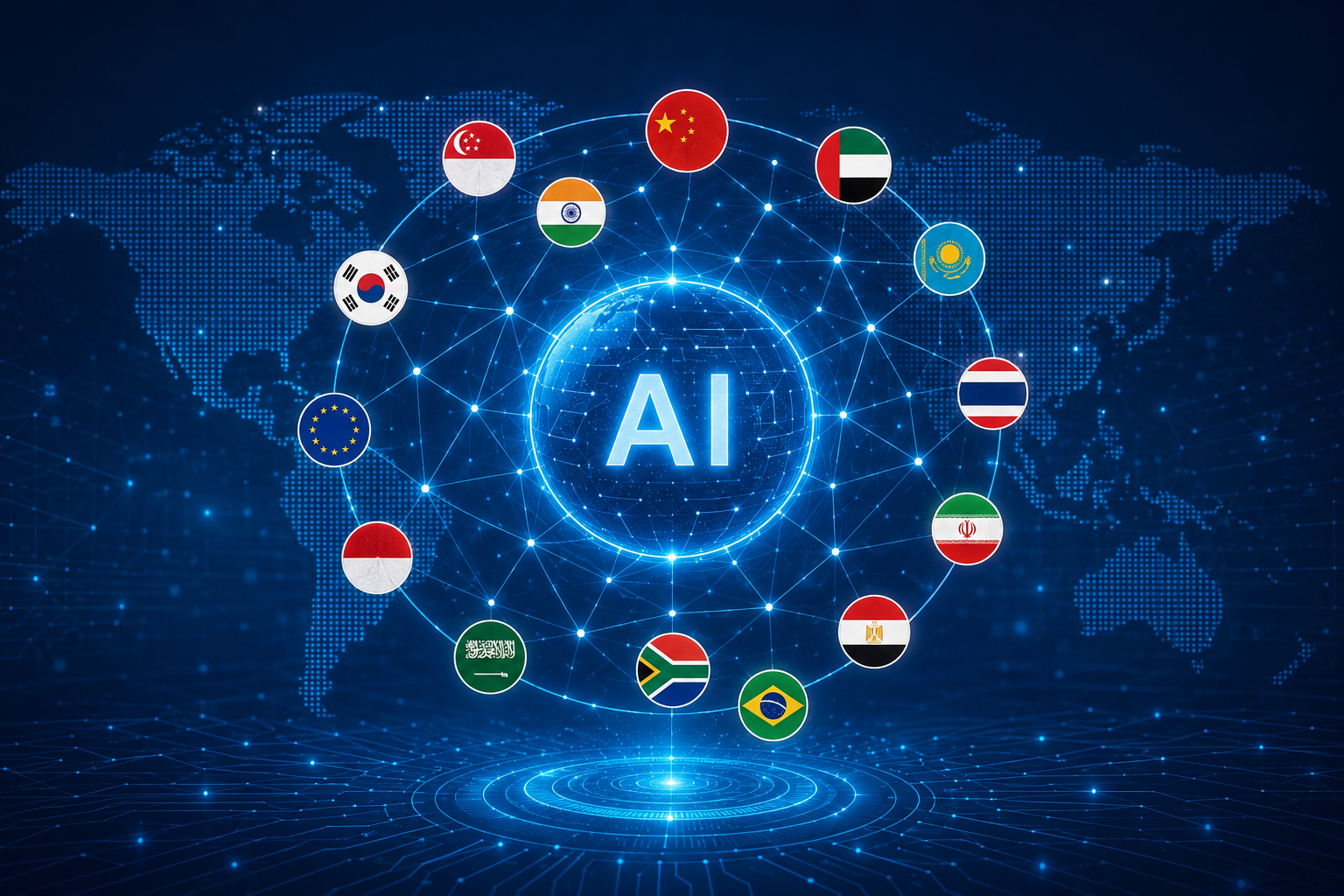
Chinese President Xi Jinping has announced the creation of the World Artificial Intelligence Cooperation Organization, a new body with 29 founding member countries aimed at building coordinated global AI governance, with plans to include the League of Arab States among its regional partners.
Key Takeaways
- ▸China has announced the creation of WAICO, a new global AI governance body with 29 founding member countries
- ▸The initiative includes plans for AI cooperation centres with the League of Arab States among other regional blocs
- ▸China's core AI industries were valued at over 176 billion US dollars in 2025 with 6,200 AI enterprises nationwide
- ▸Gulf states now face a second major global AI governance track alongside existing Western led summit processes
Chinese President Xi Jinping has announced the creation of the World Artificial Intelligence Cooperation Organization, a new international body intended to coordinate global AI governance, during a keynote address at the opening ceremony of the 2026 World AI Conference and High Level Meeting on Global AI Governance in Shanghai. Twenty nine countries have already signed the agreement establishing the organization as founding members, according to Chinese state media coverage of the event.
Xi framed the announcement as a direct response to what he described as a widening global divide in how nations are approaching AI development and regulation. "All countries should take a people centered approach and develop AI for the positive and for good," Xi said, adding that AI should be treated as a driver of shared prosperity and common security rather than a source of fragmentation between competing national approaches.
A pointed message on national security overreach
Among the more pointed elements of the speech, Xi called for countries to jointly oppose what he described as overstretching the national security concept in the field of AI, and cautioned against placing one country's security interests above those of others. That framing arrives at a moment when AI infrastructure decisions, chip export controls, and data sovereignty requirements have become deeply entangled with national security policy across nearly every major economy pursuing serious AI capability, a dynamic increasingly visible in how Gulf states have themselves had to navigate the intersection of AI infrastructure access and broader geopolitical alignment, where chip access, sovereign investment commitments, and security cooperation have become tightly interlinked in ways that go well beyond a purely commercial technology relationship.
Xi's remarks also emphasized the role of the United Nations in AI governance, calling for stronger alignment and coordination between countries on AI development strategies, governance rules, and technical standards. China described itself as committed to providing what it called international public goods relating to AI, building on the Global AI Governance Initiative Xi first proposed in 2023, and pointed to concrete new commitments including 5,000 AI training and seminar opportunities for developing countries over the next five years, alongside plans to enable 30 countries to use a Chinese developed AI powered meteorological warning system.
Regional cooperation centres, including one with the Arab League
A notable structural detail in the announcement is China's stated plan to develop international AI application cooperation centres with several major regional blocs, including the Association of Southeast Asian Nations, the African Union, the Shanghai Cooperation Organization, BRICS, and specifically the League of Arab States. That last inclusion places Gulf and wider Arab world AI cooperation directly inside a new global governance structure being built outside the frameworks the region has more commonly engaged with, such as the AI Safety Summit process that has run through Bletchley Park, Seoul, Paris and New Delhi, and which the UAE is set to host outright in 2028 after co-chairing the 2027 edition alongside Switzerland. Whether individual GCC governments choose to engage substantively with the new Chinese led body, and how that engagement is balanced against existing commitments to Western led AI governance processes and chip supply relationships, is likely to become a live diplomatic question over the coming months rather than a settled matter.
China's framing of its own AI industry scale underscored why other nations are paying close attention to its governance proposals specifically. The country's core AI industries were valued at more than 1.2 trillion yuan, roughly 176.6 billion US dollars, in 2025, with more than 6,200 AI enterprises now operating nationwide, and Chinese open source large AI models have reportedly been downloaded more than 10 billion times globally. That combination of industrial scale and open source distribution gives China a genuinely different starting position from Western AI governance efforts, which have generally been led by governments regulating a smaller number of dominant, largely closed source, commercially controlled AI labs.
Why this matters for Gulf AI strategy specifically
For governments and enterprises across the GCC, the emergence of a second major global AI governance track carries practical implications beyond diplomatic symbolism. Saudi Arabia's SDAIA has already been actively co leading its own parallel global AI governance workshop with the World Bank, a sign that Gulf states have been positioning themselves as active shapers of AI governance rules rather than passive adopters of frameworks set elsewhere. The arrival of a Chinese led alternative structure, one explicitly built around Global South participation and framed in opposition to what Xi termed the overstretching of national security concerns in AI policy, gives Gulf governments a genuinely new venue to weigh alongside their existing engagement with US led chip supply arrangements and Western AI safety summit processes.
Enterprises operating AI infrastructure across the region should expect this kind of great power competition over AI governance architecture to continue shaping practical questions well beyond diplomacy, including which technical standards eventually become the reference point for interoperability, which training data governance norms gain the widest international recognition, and how nations caught between competing governance blocs manage the increasingly complex task of remaining engaged with multiple, potentially divergent international frameworks simultaneously. The speeches delivered alongside Xi's at the Shanghai conference, including remarks from the leaders of Kazakhstan, Cambodia and Thailand and from United Nations Secretary General Antonio Guterres, suggest the new organization is likely to draw meaningful early participation from across Asia and the developing world regardless of how Western governments choose to respond.
Frequently Asked Questions
What is the World Artificial Intelligence Cooperation Organization?
It is a newly announced international body, unveiled by Chinese President Xi Jinping in Shanghai, intended to coordinate global AI governance among its 29 founding member countries.
Does the new organization include any Gulf or Arab world engagement?
China has stated it plans to develop AI application cooperation centres with several regional blocs, including the League of Arab States, though individual GCC country participation in the new organization itself has not been detailed.
How does this relate to existing AI governance efforts like the AI Safety Summit process?
It represents a parallel, Chinese led governance track alongside the existing Bletchley Park to Paris to New Delhi AI Safety Summit process, which the UAE is separately set to host in 2028.
Related Articles
Jordan's Public Sector AI Programme: What 92% Completion Rate and Five Active AI Agent Use Cases Tell Us About MENA Government Technology
Jordan completed 78 of 85 public sector modernisation axes in H1 2026. Five AI agent use cases are now in active development across five government entities. 23 data teams assessed for maturity. This is what structured government AI adoption looks like in MENA.
Aug 17, 2026
IntelligenceAI Agents Move Into UAE Retail as Shadow AI and Governance Gaps Raise Concern
UAE retailers are moving from AI-driven insight to fully autonomous AI agents for pricing and inventory, but experts warn that fragmented systems and unmonitored "shadow AI" could expose businesses to serious governance risk.
Jul 28, 2026
IntelligenceBirchford Technologies Launches First MENA AI Translator to Fix Cross-Border Payment Compliance Gap
Birchford Technologies has launched ProLink AI Translator, the first MENA platform combining SWIFT's AI model with proprietary reference data to convert unstructured postal addresses into ISO 20022 compliant payment data ahead of a November 2026 deadline.
Jul 27, 2026
IntelligenceAnthropic Launches Claude Opus 5, Delivering Near-Frontier Performance at Half the Price
Anthropic has launched Claude Opus 5, a new frontier model delivering performance close to its top-tier Fable 5 model at half the cost, alongside what the company describes as its most aligned and safest model to date.
Jul 27, 2026
IntelligenceAbu Dhabi Launches AI-Powered Centre to Monitor 45,000 Square Kilometres of Waterways
Abu Dhabi has launched a new AI powered Waterway Monitoring and Control Centre overseeing more than 45,000 square kilometres of waterways, using predictive analytics to improve maritime safety and emergency response.
Jul 24, 2026