Alibaba Pivots to "Agentic AI" with Groundbreaking 5nm XuanTie C950 Processor
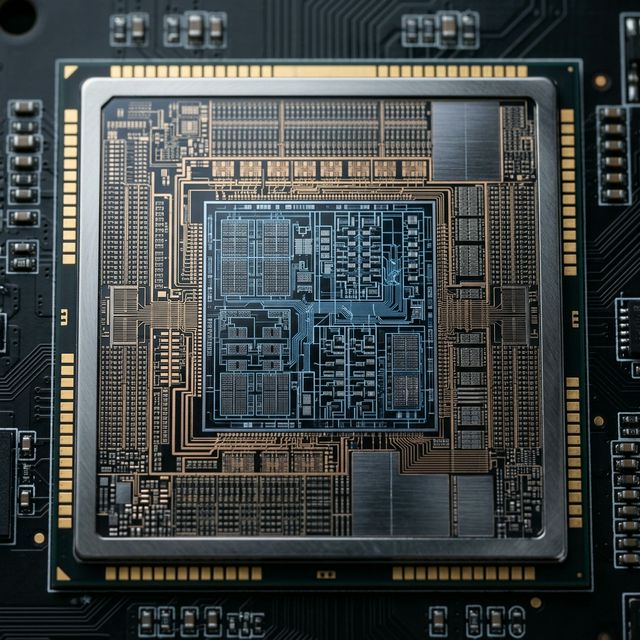
BEIJING — In a bold move to secure its dominance in the rapidly evolving artificial intelligence landscape, Alibaba Group has unveiled the XuanTie C950, a next-generation 5-nanometer processor designed specifically to power the next wave of "agentic AI."
The announcement, made Tuesday at an internal conference hosted by Alibaba’s research arm, DAMO Academy, marks a significant leap in China's domestic semiconductor capabilities and a strategic shift in how the tech giant approaches the AI market. This development follows the recent unveiling of massive AI compute projects in the MENA region, highlighting a global race for sovereign AI hardware.
A New Benchmark for RISC-V Performance
The XuanTie C950 is built on the open-source RISC-V architecture, a move that allows Alibaba to bypass traditional licensing hurdles and customize instruction sets for specific AI workloads. Clocking in at 3.2 GHz, the server chip is being hailed by Chinese media as the highest-performing RISC-V CPU in the world.
Key performance highlights include:
- Triple the Speed: The C950 performs more than three times faster than its predecessor, the XuanTie C920.
- Efficiency at Scale: The 5nm process provides the density and power efficiency required for complex, high-performance cloud systems.
- Cost-Effective Innovation: By utilizing RISC-V, Alibaba reduces licensing fees while accelerating the development of specialized AI agents.
The Shift to "Agentic AI"
The launch of the C950 is not an isolated event but a cornerstone of Alibaba’s broader pivot toward Agentic AI—systems capable of autonomous reasoning and executing complex business operations with minimal human intervention.
"RISC-V’s open-standard nature allows chip designers to customize instruction sets and accelerate specific AI workloads... This is particularly important for the development of AI agents." — Alibaba Blog Post
To support this ecosystem, Alibaba has recently rolled out several key platforms:
- Wukong: An enterprise platform optimized for AI agent workflows within China.
- Accio Work: The international counterpart to Wukong, designed to help small and medium-sized enterprises (SMEs) automate intricate business operations.
- Alibaba Token Hub: A newly created division focused on building AI work platforms, consolidating the firm's AI-focused teams.
Strategic Survival in a Low-Margin Market
This aggressive hardware and software push comes at a critical time. The Chinese AI sector has been embroiled in a fierce price war, causing token prices for LLMs (Large Language Models) to plummet. By focusing on in-house hardware (via its T-Head semiconductor arm) and autonomous agent platforms, Alibaba aims to reclaim profitability.
Instead of just selling raw computing power or cheap tokens, the company is positioning itself as the full-stack provider for the "agentic" era—owning everything from the 5nm silicon to the enterprise software running the agents. This vertical integration strategy mirrors Elon Musk's "Terafab" ambitions to control the entire AI value chain.