Think's $8M Pre-Seed: Inside MENA's Largest AI Infrastructure Round of the Year
Think just closed MENA's largest AI infrastructure pre-seed round, but the real story isn't that it beat rivals. It's that almost no one else in the region is betting pre-seed capital on this layer of the AI stack at all.
Key Takeaways
- ▸● Think, a Riyadh-based AI infrastructure startup founded in 2025, raised just over $8 million in pre-seed funding announced in July 2026.
- ▸● The round was co-led by RAED Ventures and Wa'ed Ventures (Saudi Aramco's venture arm), with Dhahran Techno Valley's VC unit also participating.
- ▸● Think builds hardware-and-software AI infrastructure combining liquid-cooled GPU compute nodes with its proprietary ILM orchestration software.
Riyadh-based Think closed just over $8 million in pre-seed funding in mid-July, and both the company and its backers are calling it the largest AI infrastructure and deep-tech pre-seed round in MENA's history. On the public record, that claim holds, but not because Think beat out a crowded field. It holds because almost nobody else in the region has tried to raise a pre-seed round this size for this specific layer of the AI stack: the hardware-and-orchestration layer that sits underneath the applications everyone else is funding.
The deal
The round was co-led by RAED Ventures and Wa'ed Ventures (Saudi Aramco's venture arm), with Dhahran Techno Valley's newly formed VC unit and a group of strategic angel investors also participating, per the company's official pre-seed announcement. Dhahran Techno Valley (DTV), anchored by King Fahd University of Petroleum and Minerals, is itself a relatively new entrant to direct startup investing; this is among the first pre-seed checks its venture arm has written since standing up the fund.
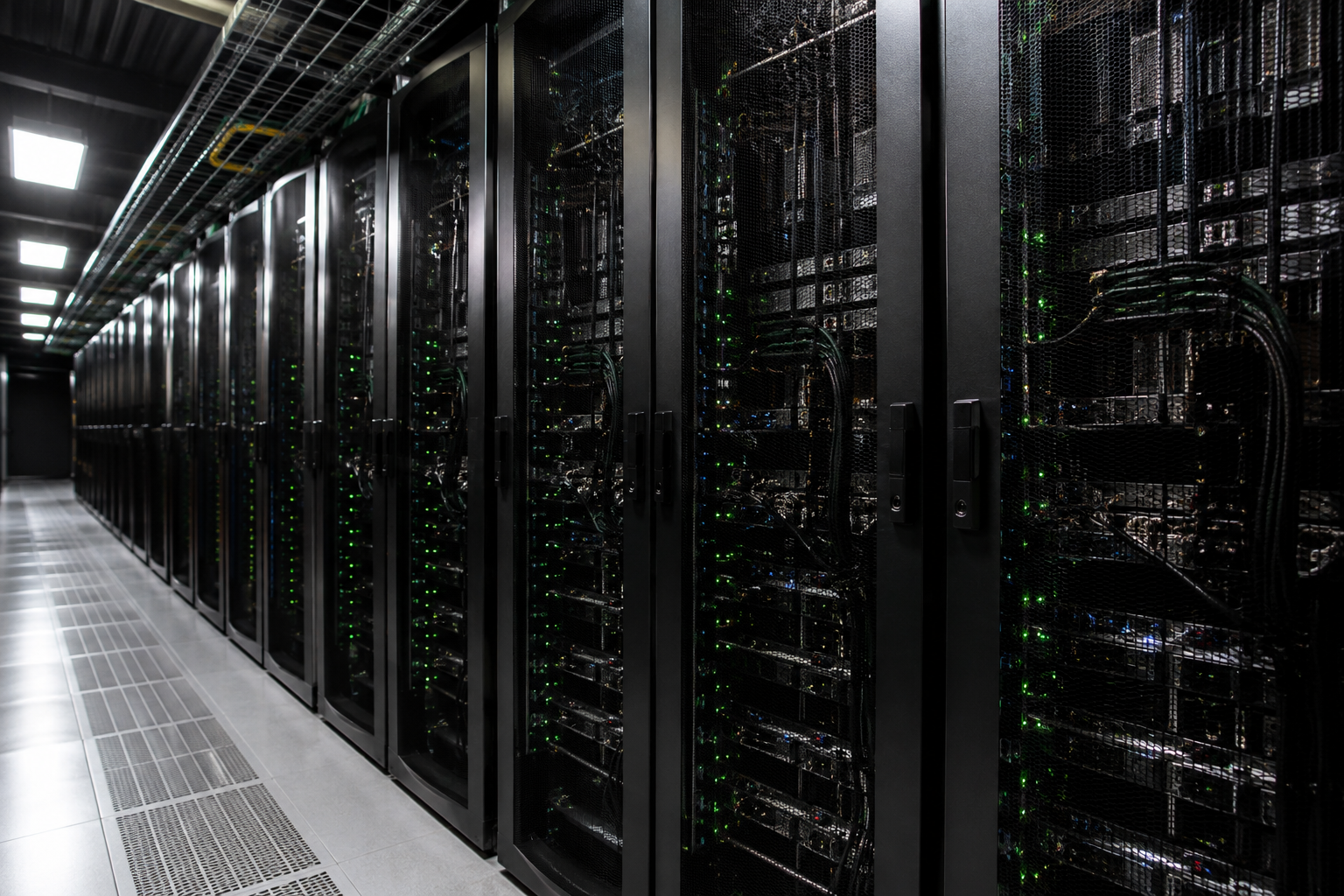
Founded in 2025 by Ahmed AlSharif, a former Meta executive, and Ammar Enaya, an enterprise technology veteran, Think builds what it calls an integrated hardware-and-software platform for AI deployment: high-density, liquid-cooled multi-GPU compute nodes paired with a proprietary orchestration layer called ILM (Intelligent Lifecycle Manager). The pitch is efficiency, not scale: squeezing more useful compute out of GPUs enterprises already have, rather than selling them more hyperscale capacity.
The company says the platform sustains GPU utilization above 90% in production benchmark testing, against an industry average commonly cited at 30–50%, using standard, commercially available GPUs rather than specialized hardware. Think also claims its per-million-token cost runs at roughly a tenth of what enterprises pay to run frontier models from Google, OpenAI, or Anthropic directly. Those are Think's own figures, not independently audited, a natural first question for anyone interviewing the company on the record.
The capital will go toward team expansion, scaling manufacturing, product development, and international growth, with the company targeting GCC-wide expansion over the next 18 months alongside continued development of ILM as a standalone software product.
Where it sits against the rest of 2026's GCC AI infrastructure deals
Two other GCC “sovereign AI infrastructure” rounds closed in the same window, and the comparison is useful mainly for what it rules out.
1001 (GCC- and London-based) raised a $30 million Series A in late June, led by Lux Capital with participation from PIF-owned Sanabil Investments, Hanabi, and 9Yards, on top of a $9 million seed round it closed roughly eight months earlier. But 1001 isn't building compute infrastructure; it's an application-layer “AI operating system” for operators in aviation, ports, energy, and logistics. It's a sovereign AI story, not an infrastructure-layer one.
CNTXT AI (Abu Dhabi) closed a $60 million Series A in mid-June, co-led by AI71 and BlueFive Capital, to scale a sovereign data-and-AI platform that includes an Arabic voice AI product already processing over a million minutes of speech for 250+ enterprise clients. Bigger check, later stage, and again an applications-and-data-sovereignty story rather than a hardware-and-orchestration one. More GCC AI deal coverage: Gulf Watch AI: MENA Artificial Intelligence News & Intelligence.
Neither is a genuine peer for the “largest AI infrastructure pre-seed” claim, because neither is pre-seed and neither is building at the same layer of the stack. Searching the public record for a true peer set (pre-seed-stage, hardware-or-orchestration-layer AI infrastructure raises in MENA over the past 18 months) turns up essentially nothing at a comparable size. That's arguably the real story: it's not that Think out-raised three rivals, it's that serious pre-seed capital for the compute layer specifically is still close to nonexistent in the region. Most regional AI capital so far has gone to applications and data-sovereignty platforms sitting on top of infrastructure built elsewhere.
The broader funding backdrop
Think's round landed inside a MENA funding market that turned more selective, not more generous, in the first half of 2026. Wamda's H1 2026 report puts total MENA startup funding at $1.7 billion across 242 rounds, an 18% decline from $2.1 billion in H1 2025, with deal volume down 28% year-on-year. Q2 alone brought in $793.5 million across 104 deals, down 16% from Q1. Wamda's read is that capital concentrated into larger, more established ecosystems and sectors with a clearer path to scale, rather than spreading thinner across more bets.
Against that backdrop, a Saudi-government-adjacent-backed infrastructure play (Wa'ed Ventures is Aramco's venture arm, and DTV is anchored by a national university) closing the region's largest infra-focused pre-seed fits the broader pattern: investors rotating toward capital-intensive, strategically aligned infrastructure bets rather than earlier-stage application experiments.
Frequently Asked Questions
How much did Think raise, and when?
Think, a Riyadh-based AI infrastructure startup, raised just over $8 million in pre-seed funding, announced in mid-July 2026.
Who invested in Think's pre-seed round?
The round was co-led by RAED Ventures and Wa'ed Ventures, Saudi Aramco's venture arm, with participation from Dhahran Techno Valley's venture capital unit and a group of strategic angel investors.
Who founded Think, and when?
Think was founded in 2025 by Ahmed AlSharif, a former Meta executive, and Ammar Enaya, an enterprise technology veteran.
Related Articles
Governments Are Trading AI Subsidies for Equity Stakes. The Gulf Got There First
The UK just became the latest government to take equity stakes in AI companies rather than simply subsidizing them, a strategy Gulf sovereign funds have been running at a far larger scale for over a year.
Aug 26, 2026
FundingGCC Sovereign AI Funding Roundup: 1001 and CNTXT AI Raise $90 Million Combined as Investors Back Local Infrastructure
Two GCC-based sovereign AI companies, 1001 and CNTXT AI, have together raised $90 million in recent funding rounds, with backing from Lux Capital, PIF-owned Sanabil Investments, and Abu Dhabi's AI71, signalling growing investor conviction in locally built and governed AI infrastructure.
Jul 15, 2026
Fundingdu Launches USD 50 Million Ventures Fund to Back AI, Fintech and Cybersecurity Startups Across MENA
UAE-based CNTXT AI has acquired Actualize, a GCC-focused startup building dialect-aware Arabic voice agents capable of completing transactions and workflow actions. The deal targets a GCC conversational AI market projected to reach USD 2.5 billion by 2034.
Jun 8, 2026
FundingThe $500M Moat: Inside Kirkland and Ellis's Plan to Productise Legal Intelligence
Kirkland and Ellis is committing $500 million to build a closed, proprietary AI platform trained on the knowledge of its top partners. The move reframes elite legal AI from tool adoption to outright intelligence ownership.
May 29, 2026
FundingFireworks AI Eyes $15 Billion Valuation as AI Inference Race Heats Up
Fireworks AI is in talks to raise a fresh funding round at a $15 billion valuation, nearly four times its $4 billion valuation from October 2025, as demand for AI inference infrastructure accelerates across enterprise markets globally.
May 28, 2026