The Physical AI Frontier: Analyzing the LG-NVIDIA Strategic Nexus
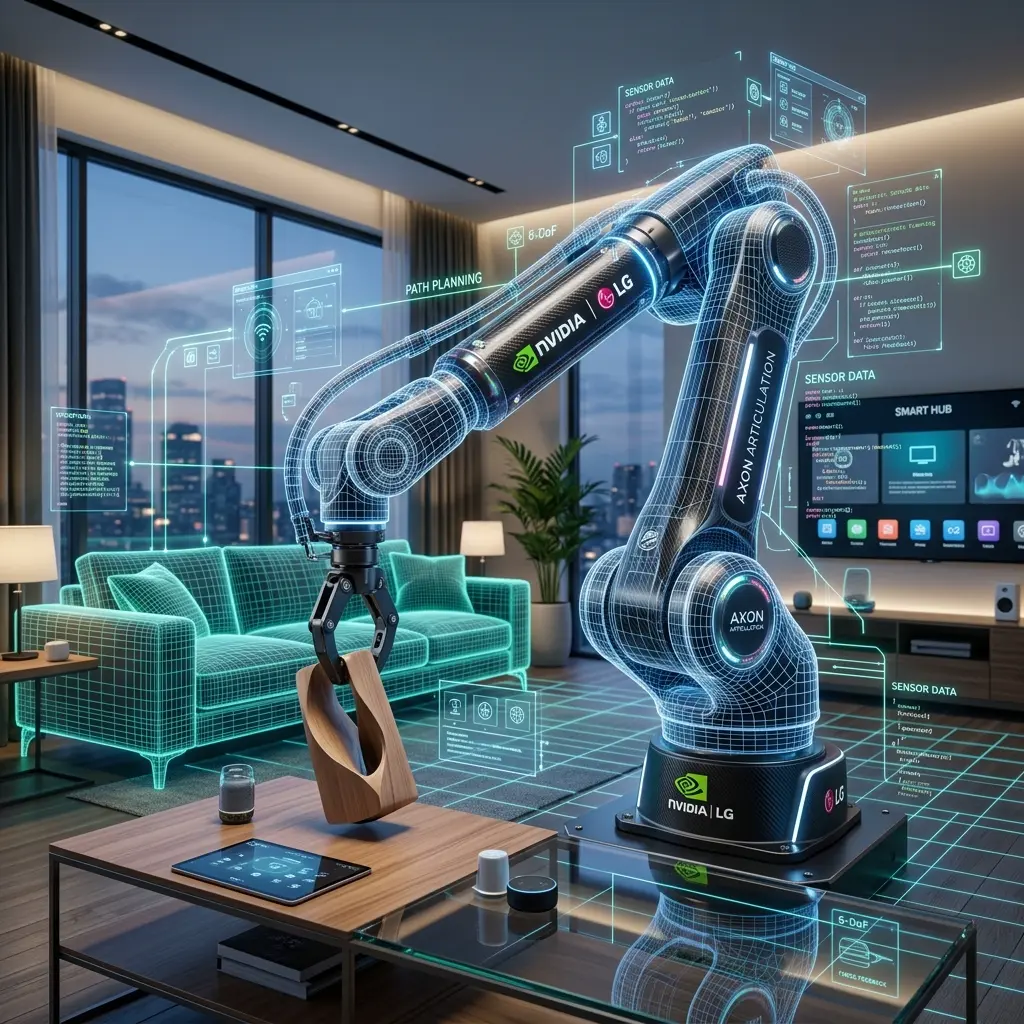
The exploratory discussions between LG Electronics and NVIDIA represent a critical shift in the AI trajectory: the transition from "Cyber AI" (LLMs and chatbots) to "Physical AI" (autonomous systems interacting with the material world).
By combining NVIDIA’s computational dominance in the Omniverse and Isaac platforms with LG’s global leadership in thermal management, smart appliances, and automotive components, the two giants are addressing the three primary bottlenecks of autonomy: heat, latency, and environmental variability. This marks a new phase in robotic deployment, expanding beyond the industrial use-cases we saw with China's $1.46 billion grid modernization.
I. Solving the "Physics Problem": Thermal Management in Data Centers
As AI models grow in complexity, the "densification" of compute clusters has pushed traditional infrastructure to a breaking point. High-density server racks generating record revenues for NVIDIA also produce extreme thermal output that air cooling can no longer mitigate.
The Infrastructure Synergy
- The Problem: Thermal throttling. When server temperatures exceed safety thresholds, compute nodes automatically reduce performance, leading to a diminished Return on Investment (ROI) for expensive silicon.
- The LG Solution: At CES 2026, LG debuted high-efficiency HVAC and specialized liquid cooling solutions designed specifically for AI data centers.
- Strategic Outcome: By integrating LG’s hardware into NVIDIA’s ecosystem, facility operators can increase power density per square foot. For LG, this transforms the company from a consumer brand into a critical Enterprise Infrastructure Provider.
II. Hardware Actuation and the Edge Inference Pipeline
The movement of a physical limb—such as those on LG’s CLOiD robot—requires a "zero-latency inference pipeline." In physical AI, a delay of milliseconds can result in a broken object or a safety hazard.
Bridging the Simulation Gap
LG’s "Affectionate Intelligence" platform, which powers robots with seven degrees of freedom and individually-actuated fingers, requires massive amounts of spatial data. However, LG lacks the digital twin infrastructure to train these models at scale.
- NVIDIA’s Contribution: The Isaac robotics stack and Omniverse provide the simulation environment needed to "pre-train" robots in a virtual world before they ever enter a physical home.
- Edge Inference: By utilizing NVIDIA’s edge-compute chips, LG can process visual data and calculate "grip force" locally, bypassing the costs and latencies associated with cloud-based processing.
III. From Factory Floors to Living Rooms: Data Diversity
While NVIDIA successfully tested its HMND 01 Alpha humanoid in structured Siemens factories, the "unstructured" environment of a consumer home remains the "final boss" of robotics.
| Environment | Variables | Difficulty Level |
|---|---|---|
| Industrial (Siemens) | Fixed lighting, marked paths, regulated safety. | Moderate |
| Domestic (LG ThinQ) | Changing light, moving pets, unpredictable humans. | Extreme |
By leveraging the LG ThinQ ecosystem, NVIDIA gains access to a data-rich training environment. This allows for the training of models on actual domestic variability, moving beyond sterile simulations to create a universal development infrastructure for real-world autonomy.
IV. Automotive Integration: The Unified Cabin
The final pillar of this collaboration is the automotive sector. LG’s fast-growing components division (infotainment and in-cabin sensors) currently sits adjacent to NVIDIA’s DRIVE platform (autonomous driving compute).
- The Convergence: Currently, manufacturers struggle to bridge "infotainment" (what the user sees) with "autonomous compute" (how the car drives).
- The Strategy: A unified architecture would allow for seamless integration between gaze-tracking, adaptive displays, and underlying driving logic. This reduces engineering hours spent on custom APIs and enables streamlined Over-the-Air (OTA) updates for the entire vehicle ecosystem.
Conclusion: The Architecture of Reality
The LG-NVIDIA talks reveal that the future of physical AI is not merely about smarter algorithms, but about the hardware-software handshake. To bring AI out of the screen and into the physical world, the industry must solve for the heat of the data center, the latency of the robotic arm, and the chaos of the human home. Together, these companies are building the "reference architecture" for the next decade of autonomous existence. For ai startups dubai/gcc, understanding this convergence is essential for hardware planning and infrastructure investment.