Robotic Automation in Critical Infrastructure: China’s $1.46 Billion Grid Modernization
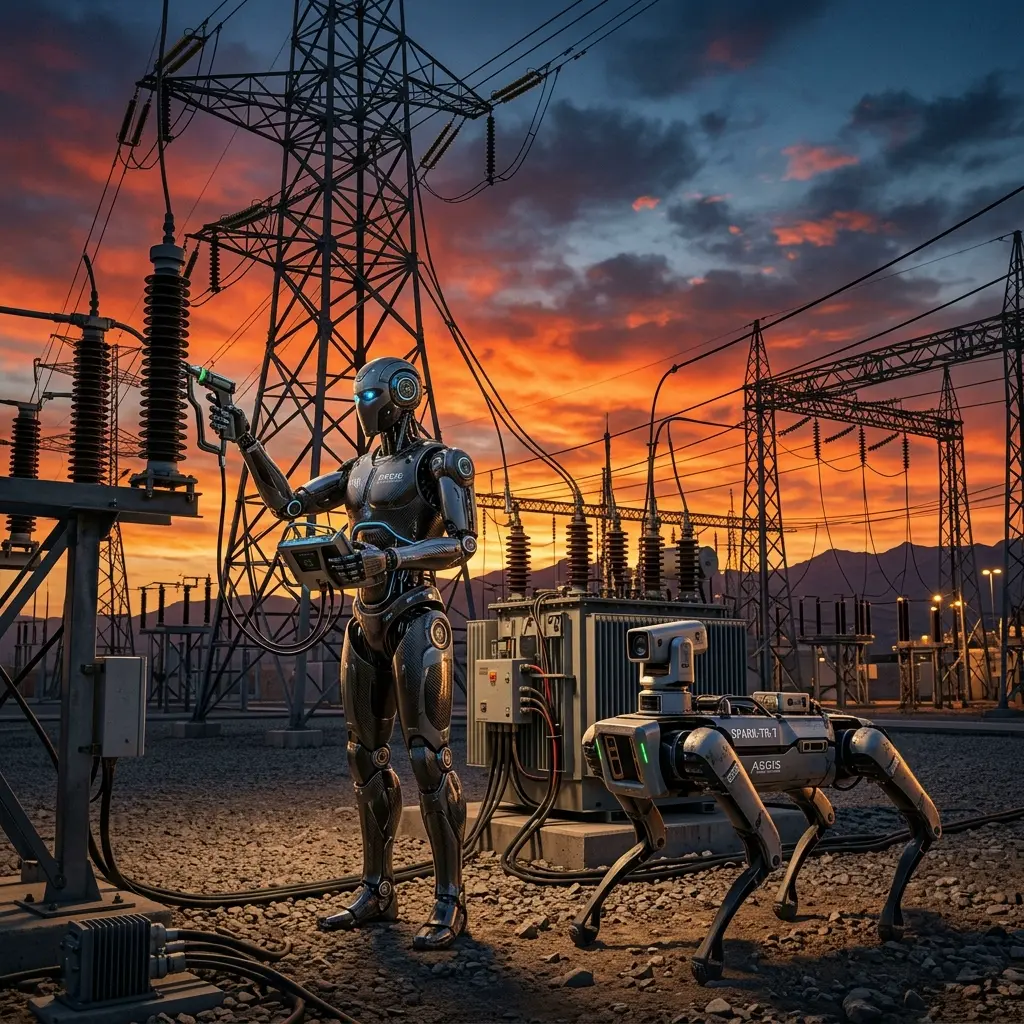
This article evaluates the strategic shift from human-centric to robot-centric maintenance within the State Grid Corporation of China (SGCC). By investing approximately $1.46 billion in a specialized fleet of 8,500 autonomous units, China is addressing the global "aging infrastructure crisis" through embodied AI.
1. Introduction
The maintenance of high-voltage power grids remains one of the most hazardous and logistically challenging industrial tasks. In 2026, the State Grid Corporation of China announced a definitive transition toward total automation across 26 provincial regions. This initiative represents the largest grid-specific robotics deployment in history, aiming to stabilize power reliability while reducing the operational risks associated with human crews in remote or high-voltage environments. It reflects a scale of infrastructure automation that GCC enterprises are actively monitoring.
2. Taxonomy of the Robotic Workforce
The deployment utilizes a tiered approach, matching specific robotic morphologies to environmental challenges:
| Robot Type | Quantity | Primary Function | Technical Capability |
|---|---|---|---|
| Quadruped ("Robot Dogs") | 5,000 | Substation & Mountain Patrol | Navigation of uneven terrain; thermal leak detection. |
| Humanoid Robots | 500 | Ultra-High-Voltage (UHV) Work | Complex manipulation; maintenance of live electrical systems. |
| Dual-Arm Wheeled Units | 3,000 | Coordinated Repair & Logistics | Heavy lifting (up to 100kg); synchronized hardware repair. |
3. Training Methodology: Mimicry and Scenario-Based Learning
Led by Li Duanjiao of the SGCC robotics laboratory, the integration utilizes Embodied AI trained through a combination of digital twin simulation and physical mimicry, similar to techniques used in advanced robotic control architectures.
- Specialized Skillsets: The fleet is currently programmed with 15 specialized skills across six operational scenarios.
- Physical Benchmarks: Units have successfully demonstrated the ability to open control interfaces, identify electrical leakage, and transport heavy components in testing facilities prior to field deployment.
4. Economic and Geopolitical Implications
The rapid scaling of this workforce has catalyzed China’s domestic robotics sector, with firms like Unitree, AgiBot, and UBTech shifting toward mass production models.
- Infrastructure Longevity: By utilizing robots for preventative maintenance, China aims to extend the lifespan of existing infrastructure, contrasting with Western models that prioritize complete renovation.
- Global Export Potential: The technology is already being positioned as a global service, with substation-inspection units currently being exported to Chile and other international markets, opening doors for adoption by ai startups dubai/gcc looking for hardware integration.
- The 2030 Projection: This deployment serves as a pilot for a broader national goal: the production of 2.1 million embodied AI units by 2030, positioning power grids as the primary testing ground for large-scale autonomous operations.
5. Conclusion
The $1.46 billion investment by SGCC and China Southern Power Grid marks a departure from traditional infrastructure management. If successful, the reduction in human error and the increase in maintenance frequency provided by an 8,500-unit fleet could significantly lower long-term energy costs and increase grid uptime. For the global community, it establishes a new benchmark for "autonomous critical infrastructure" that may soon become the requisite standard for modern energy security.