The Algorithmic Classroom: Assessing the Cognitive and Institutional Impact of Generative AI in K-12 Education
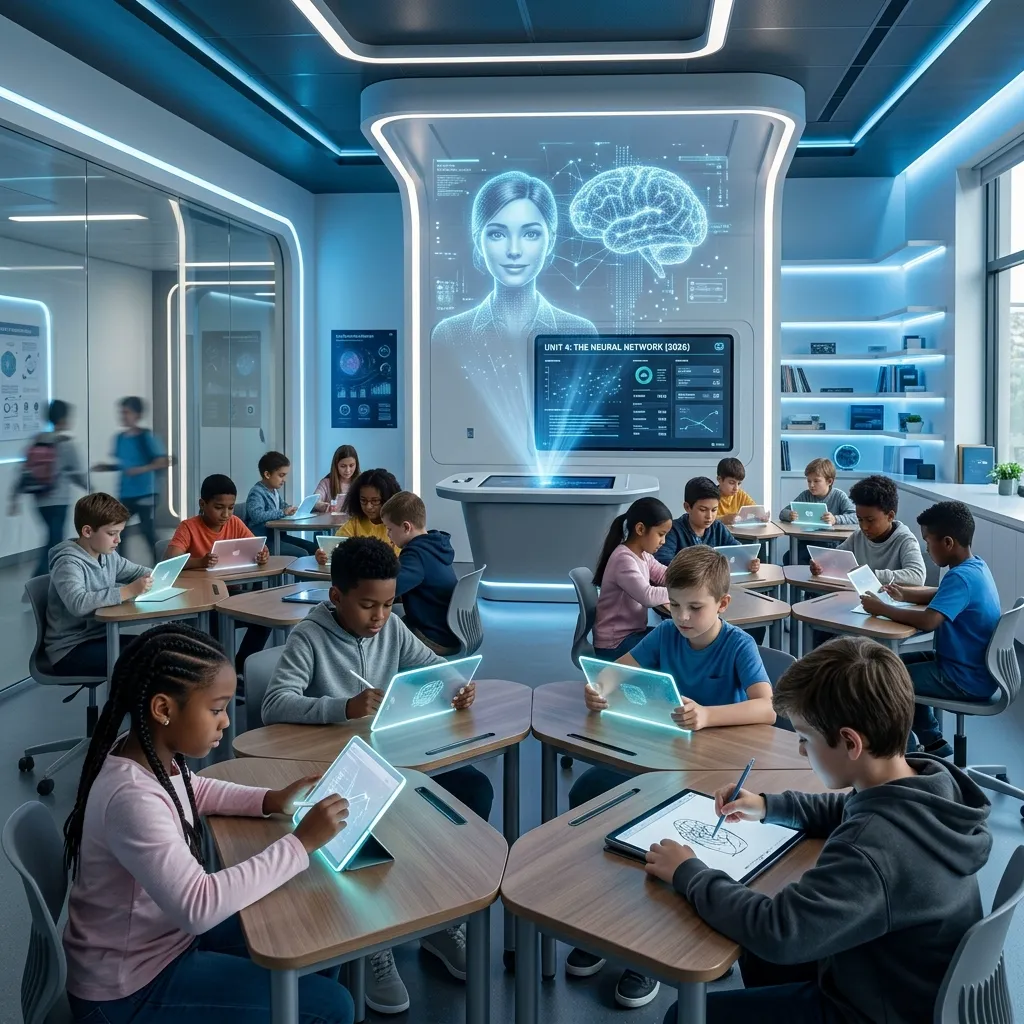
The rapid integration of Large Language Models (LLMs) and generative AI into primary and secondary education has sparked a profound debate between technological proponents and a growing coalition of educators, psychologists, and parents.
While tech conglomerates frame AI as a "personalized learning" necessity, emerging research suggests significant risks, including cognitive atrophy, diminished persistence in problem-solving, and the erosion of social-emotional development. This article analyzes the institutional drivers of AI adoption in schools and the burgeoning movement for a "human-centered" pedagogical moratorium.
1. Introduction: The Pandemic-Led Tech Infiltration
The current ubiquity of AI in schools is largely a legacy of the COVID-19 pandemic. Between 2020 and 2026, the adoption of low-cost hardware—specifically Google Chromebooks—created a "captive market" for generative tools. Current data indicates that approximately 80% of K-12 teachers in the United States operate within districts utilizing these devices, which now come pre-installed with AI suites like Gemini. What began as a crisis-response utility has evolved into a permanent digital infrastructure, prompting questions about the long-term effects of "always-on" AI assistance on developing minds.
2. Cognitive Implications: Atrophy vs. Augmentation
The primary concern cited by cognitive scientists is the transition from "cognitive onloading" (building foundational skills) to "cognitive offloading" (delegating thought to machines).
2.1 The "Persistence Gap"
A 2025 multi-institutional study involving MIT and Oxford highlighted a critical vulnerability: students using LLMs for mathematics perform significantly worse when the AI is removed. This mirrors findings in English schools where thinking skills are reportedly in decline.
- Loss of Persistence: Students accustomed to instant AI solutions are more likely to give up on complex problems.
- Foundation Erosion: Experts argue that tools like "Help me write" or "Beautify this slide" interrupt the "neuropsychological substrate" required to form narratives and arguments.
2.2 Cognitive Atrophy
Research from MIT suggests that over-reliance on LLMs may lead to "cognitive atrophy," particularly in younger children (under age 10) who have not yet developed the critical thinking skills necessary to evaluate AI-generated outputs.
3. Social-Emotional and Developmental Risks
Beyond academic performance, the anthropomorphic nature of AI presents unique psychological challenges for tweens and adolescents:
- Biological Hijacking: Neuroscientists note that during ages 10-11, surging oxytocin and dopamine levels drive a need for peer feedback. AI chatbots can "hijack" these social receptors, offering a simulation of intimacy that bypasses the practice of real-world social navigation.
- Creative Standardization: LLMs optimize for speed and "impressive" outcomes, potentially standardizing child creativity into a corporate-approved aesthetic.
4. The Institutional Landscape: Corporate Interests
The deployment of AI in schools is not merely a pedagogical shift but a massive commercial venture. Major players including Google, Microsoft, OpenAI, and Anthropic have established deep roots within school administrations through fellowship programs and product placement.
4.1 Ethical and Legal Challenges
In major districts like New York and Los Angeles, parents have raised alarms over data privacy—specifically the use of voice-recording bots—and inappropriate content generated in elementary classes.
5. The Resistance: A Movement for Human Learning
A growing counter-movement, led by groups such as Schools Beyond Screens, is advocating for a "Student Tech Bill of Rights." Their demands include the right to analog learning, cognitive autonomy from predictive interruptions, and corporate neutrality in public curriculum.
6. Conclusion
The narrative that AI in K-12 education is "inevitable" is increasingly being challenged. As evidence of "Chromebook remorse" grows and research into cognitive atrophy mounts, the debate is shifting from how to implement AI to whether it belongs in the foundational years of human development at all. The future of the classroom may depend on recognizing that the "inefficiency" of a child’s learning process is not a bug to be fixed by AI, but a vital feature of human growth.