Erosion of Critical Thinking: English Teachers Sound the Alarm over AI in Classrooms
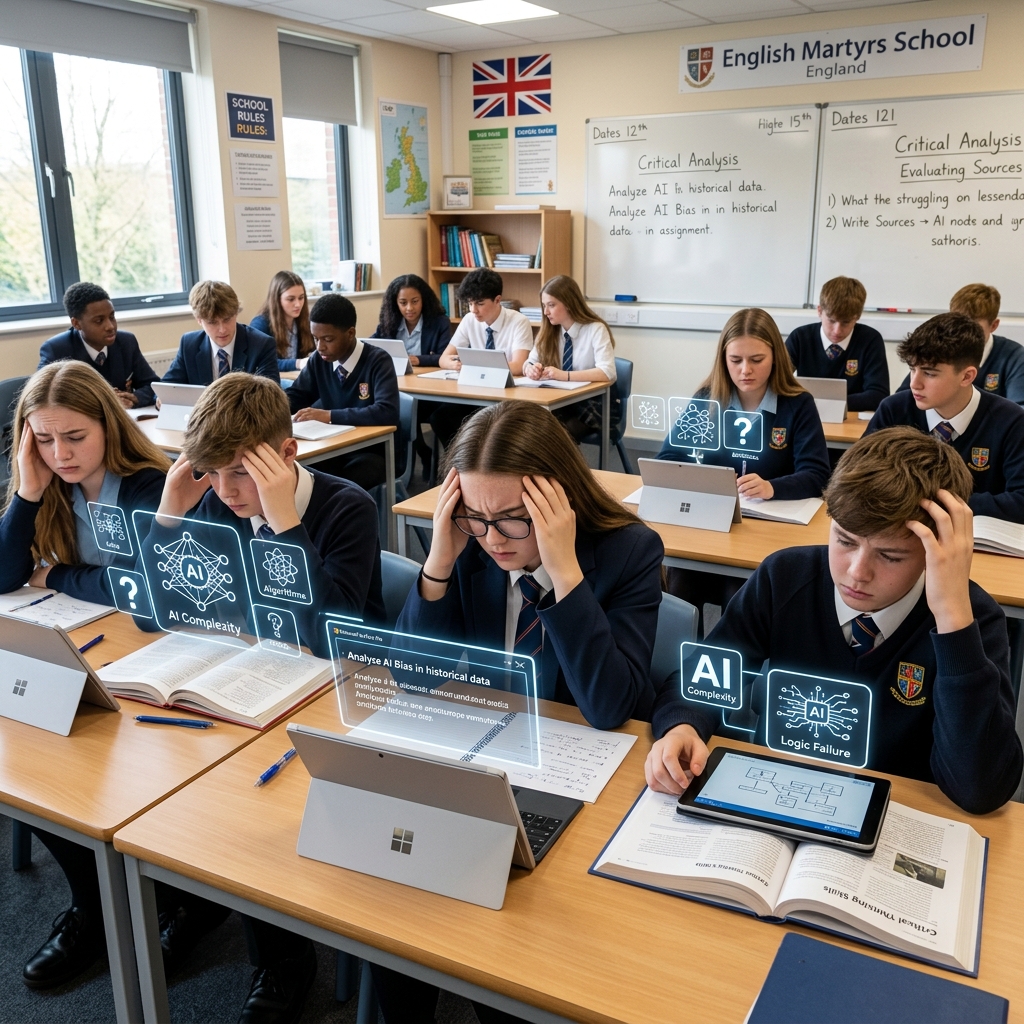
A stark warning has emerged from the front lines of English education as secondary school teachers report a significant decline in pupils' core intellectual abilities, citing a growing over-reliance on artificial intelligence.
Brighton — According to a sweeping survey of 9,000 state school teachers conducted by the National Education Union (NEU), two-thirds of educators believe students are losing their capacity for critical thinking, writing, and problem-solving. The findings paint a troubling picture of a generation increasingly dependent on digital shortcuts.
The Death of 'Learning'?
Teachers involved in the poll expressed deep concern that the fundamental pillars of education are being undermined. One respondent noted that pupils "no longer feel the need to spell" due to voice-to-text technology, while others described a broader decay in social and cognitive skills.
"AI is destroying what ‘learning’—problem-solving, critical thinking, and collaborative effort—is," one teacher warned. The sentiment among the profession is that while AI can mimic output, it cannot replicate the cognitive struggle required for genuine development.
The Great Tutoring Debate
The survey highlights a major rift between the teaching profession and the government's "digital revolution." In January, Education Secretary Bridget Phillipson announced plans for AI-driven tutoring tools aimed at supporting 450,000 disadvantaged pupils, framing the move to "democratize" tailored support.
However, the NEU poll reveals that:
- 49% of teachers oppose the rollout of AI tutors.
- Only 14% are in favor of the plan.
- Many fear the technology will be used as a cost-cutting measure to replace human staff.
A Double Standard?
In a striking paradox, while teachers are skeptical of student AI use, they are increasingly turning to the technology themselves. The survey found that 76% of staff now use AI for their day-to-day work—up from 53% last year.
Top Teacher Uses for AI:
- Creating classroom resources (61%)
- Lesson planning (41%)
- Administrative tasks (38%)
- Marking and assessment (7%)
Despite this high adoption rate, the sector remains a "Wild West" of regulation. 49% of schools lack any formal policy governing AI use, leading to what one teacher described as "sub-standard slop" being produced due to a lack of proper training.
NEU General Secretary Daniel Kebede urged the government to pause and reconsider. "The government is taking a risk in rolling out AI tutoring before its impacts are properly understood," Kebede said, emphasizing that the ability to think independently must remain at the heart of the curriculum.
The MENA Verdict
As GCC nations like the UAE and Saudi Arabia push for "AI in every classroom," the English experience offers a cautionary tale. The rift between technology adoption and cognitive development is real.
For the Arab world, the challenge is double-edged: we must bridge the digital divide while ensuring that AI remains a "tutor" rather than a "replacement" for the critical thinking skills required to lead the next generation of the global economy. Strategic focus must be placed on "AI Literacy" for both students and teachers, moving beyond simple tool use to understanding the underlying logic.