AI's Heritage Blind Spot in the Middle East: How UAE and Qatar Are Fixing It
Did you know that less than 0.6% of the world's digital data is in Arabic? With such minimal representation, how can we expect AI models trained on global datasets to authentically tell Middle Eastern stories—whether in films, games, or immersive experiences? The result is that tools capable of generating content at unprecedented speed often miss the region's linguistic, cultural, and ethical nuances entirely.
The Data Gap: A Heritage Crisis
"In AI, language is more than several words sitting next to each other," explains Professor Mohammed Ghaly of Hamad Bin Khalifa University. "When data is overwhelmingly in another language, the AI is not just incomplete—it's blind to our heritage, our scholarship, and our values."
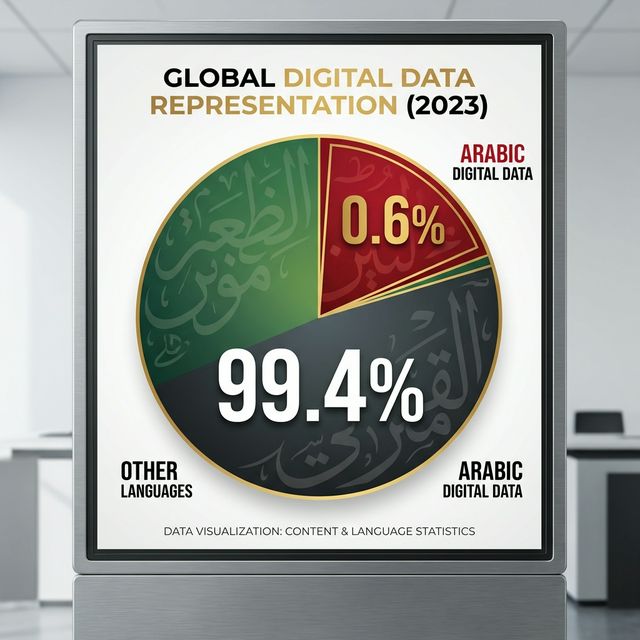
Professor Ghaly points out that much of Arabic historical and religious scholarship—some dating back to the 14th century—remains undigitized. "If these texts aren't in the datasets, AI models can't recognize them. You can't claim an Arabic-first approach with 0.6% representation."
This "heritage blind spot" is not merely a technical challenge but an ethical one. AI's statistical methods can generate false content or misrepresent traditions when the underlying data lacks depth and authenticity. "Ethics isn't just about privacy or data protection," says Ghaly. "It's about evidence-based knowledge. If the AI can't access authoritative texts, it can't be trusted to guide users responsibly."
UAE and Qatar: Leading Cultural Continuity in Creative AI
Across the Gulf, leaders in the UAE and Qatar are addressing this challenge by embedding cultural and ethical oversight into the creative AI development process. The emphasis is on knowledge continuity and linguistic diversity.
HH Sheikha Moza bint Nasser, who plays an active role in spearheading social and educational reforms in Qatar, emphasizes: "We were there at the foundations of knowledge and work, and we are here today, shaping its future. Linguistic diversity is critical in developing technologies relevant across cultures."
She views AI not as a means to replicate Western models, but as a tool to create stories that resonate both locally and globally—preserving Gulf heritage while engaging international audiences.
The Human Challenge: Deployment vs. Adoption
For creative teams across the MENA region, using AI effectively is as much a human challenge as a technological one. Rania El Khoury, Global Adoption Practice Lead at TeKnowledge, observes a "two-speed" pattern in AI integration.
"The fastest adopters realize that Deployment ≠ Adoption," she says. "AI might generate 100 versions of a scene in seconds, but it cannot choose which one feels right. Human creators are the cultural anchors, ensuring that heritage, aesthetics, and values are preserved."
This insight is particularly relevant in Dubai and Abu Dhabi, where AI infrastructure investments are accelerating rapidly. The technology may be ready, but successful integration requires cultural alignment and human oversight.
Ethics as a Creative Enabler, Not a Constraint
Professor Ghaly emphasizes that ethics should support creativity rather than limit it. "True knowledge is to find solutions for people, to guide responsibly," he says. This philosophy shapes both content creation and business strategy throughout the Gulf region.
Designers and engineers are encouraged to incorporate ethical considerations from the outset, ensuring that AI-generated stories are trustworthy and culturally reflective. This approach aligns with the UAE's broader AI ethics framework, which emphasizes transparency, fairness, and human oversight.
El Khoury adds that AI works best when handling repetitive tasks, allowing people to focus on critical and creative decisions. "In our framework, the human is Air Traffic Control," she explains. "AI provides the power, but the human provides the intent and the destination."
Teams that adopt this approach move beyond simple tool usage to Agentic AI—managing complex tasks while maintaining ethical oversight and creative authenticity.
Building an Ethical AI Ecosystem: Qatar's Strategic Approach

Qatar's investment ecosystem actively supports this vision through strategic programs. Dr. Hamad Rashid Al Naimi, Chief Strategy Officer at Invest Qatar, explains that the Startup Qatar Program helps AI-driven startups while promoting ethical practices.
"We guide businesses to align with the Ministry of Communications' ethical AI guidelines, emphasizing fairness, transparency, human oversight, and cultural alignment," he says.
Fanar: Qatar's Arabic-First AI Model
High-growth startups receive funding, mentorship, and access to Qatar's sovereign AI stack, including Fanar—an Arabic-first generative AI model that understands different dialects and cultural nuances. This helps startups avoid the bias inherent in non-native models and create genuinely localized content.
Startups can access up to $5.5 million in growth-stage funding, along with mentorship and infrastructure support. "But success isn't measured just by dollars," Al Naimi notes. "It's about building a knowledge-intensive, culturally aligned ecosystem that strengthens local capabilities and delivers long-term socio-economic impact."
The Digitization Challenge
Yet significant gaps remain. Many crucial Arabic texts needed for accurate AI storytelling exist only in print or as low-quality scans. "Without curating these sources first, investments in AI risk producing content that is impressive but culturally hollow," warns Professor Ghaly.
The strategy, he suggests, must evolve from web scraping to curated, evidence-based digitization—treating AI as a knowledge steward rather than merely a content factory.
Economic and Cultural Returns: A Dual Investment
Investing in culturally aligned AI isn't just about ethics—it makes compelling economic sense. Al Naimi points out that fast-growing startups in AI, gaming, and immersive media attract foreign investment and facilitate knowledge transfer across the broader MENA region.
The UAE's approach mirrors this strategy, with significant investments in AI education partnerships and infrastructure that prioritize both technological advancement and cultural preservation.
The Future: Human Intent at the Center
Looking ahead, El Khoury envisions a Middle East where human intent remains central to AI-driven storytelling. "Transparency is the default, upskilling has closed the gap, and human responsibility is absolute," she says.
"Ethical success won't be measured by how much AI content we produce, but by how much the human soul of the story is preserved."
This vision aligns with the broader Gulf strategy: leveraging AI's power while ensuring that regional heritage, values, and cultural authenticity remain at the forefront. As the UAE and Qatar continue to lead in AI adoption and innovation, their emphasis on ethical, culturally-aligned AI development offers a blueprint for the entire MENA region.
Key Takeaways for UAE AI Stakeholders
- Data representation matters: Arabic content represents less than 0.6% of global digital data, creating significant AI training gaps
- Cultural alignment is economic: Ethically-aligned AI attracts investment and builds sustainable ecosystems
- Human oversight is essential: Deployment doesn't equal adoption—cultural anchors preserve authenticity
- Arabic-first models work: Tools like Fanar demonstrate the viability of dialect-aware, culturally-nuanced AI
- Digitization is foundational: Historical texts must be curated and digitized for AI to truly understand regional heritage
Source: Fast Company Middle East
Related Topics: UAE AI Regulation, Qatar AI Strategy, MENA AI Readiness