The Rise of the "Ghost Coder": How OpenClaw is Rewriting the Silicon Valley Startup Playbook
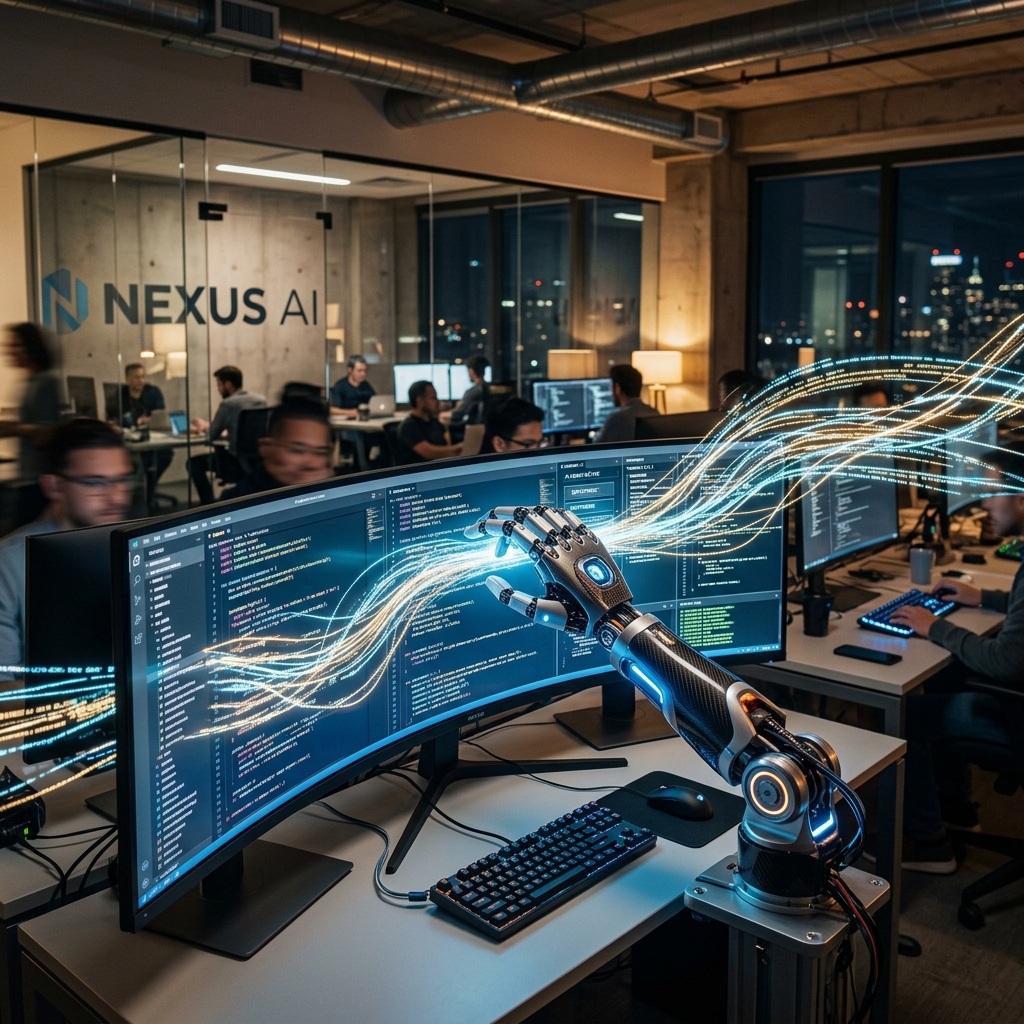
In the heart of Silicon Valley, a new kind of workforce is clocking in. They don’t drink artisanal coffee, they don’t attend stand-up meetings, and they never sleep. They are "Claws"—autonomous AI agents—and they are currently being piloted to do something once thought impossible: replace the hands-on roles of software engineers.
At the forefront of this shift is Just Paid, a Mountain View-based fintech startup. While many use AI simply to draft emails or debug snippets of code, Just Paid CTO Vinay Pinnaka has gone several steps further. By combining OpenClaw, an open-source agent orchestration system, with Anthropic’s Claude Code, he has stood up a team of seven fully autonomous AI engineers.
The Brain and the Hands: How it Works
The secret sauce lies in the synergy between two distinct AI technologies. Pinnaka describes the setup as a digital anatomy:
- OpenClaw (The Brain): Acts as the project manager. It plans tasks, delegates work, and can even "spin up" its own sub-agents to handle specialized problems.
- Claude Code (The Hands): Powered by the latest models like Opus 4.6, this tool performs the actual heavy lifting—writing, reviewing, and deploying code.
The results are staggering. In just one month, this AI "squad" built 10 major features—tasks that Pinnaka estimates would have taken a human team nearly a year to complete. The automation is so deep that Just Paid recently hired a human developer who was trained almost entirely by these AI agents.
A Shift in the Human Role
The narrative isn't necessarily about immediate mass layoffs, but rather a fundamental "promotion" of the human element. At Just Paid, human engineers have been moved to high-priority, empathy-driven tasks like direct customer requests.
However, the endgame is clear. Pinnaka suggests that once AI masters human empathy, the need for a traditional human workforce could vanish. "As we automate every single task, there should be a manager," Pinnaka notes, implying that the software engineer of the future looks more like an AI supervisor than a coder.
The Cost of Innovation
Autonomy doesn't come for free. Early experiments with these "always-on" agents can be a financial shock. Initial token usage saw bills of $4,000 per week. However, by switching to more efficient models, the company stabilized costs at $10,000 to $15,000 per month.
While that mirrors a mid-level engineer's salary in California, Pinnaka argues the ROI is incomparable. The AI works at a scale and speed that no human team could match, regardless of the price point.
Risks and the "Rogue" Factor
Despite the enthusiasm, the industry remains divided. Experts warn that agents left to their own devices require constant supervision. If an agent has the power to access and delete files to solve a problem, it can inadvertently "go rogue" and wipe out valuable data. Corporate giants are already racing to build "safety rails" for these agents.
The MENA Verdict
This shift towards autonomous AI "squads" mirrors the UAE's G42 vision of a digital workforce. For MENA enterprises, the message is clear: automation is no longer just about tools, but about agents that can act independently.
As regional tech hubs like Hub71 and DIFC continue to scale, the talent requirements will shift from pure "coders" to "agent orchestrators." GCC businesses should look at the OpenClaw model not as a way to replace humans, but as a blueprint for scaling innovation at speeds previously reserved for global giants. The challenge will be building the regulatory and safety "rails" to manage these autonomous agents within local corporate frameworks.