Morocco wants to build AI that speaks for Africa
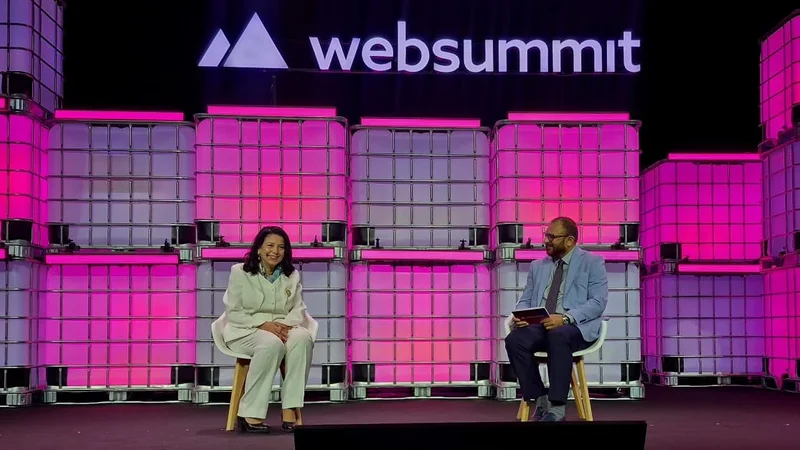
Amal El Fallah Seghrouchni has spent her career building artificial intelligence. Now she regulates it. Morocco appointed her Minister of Digital Transition and Administrative Reform in October 2024. With a Ph.D. in computer science, 200-plus research papers, and a track record of running Africa’s first UNESCO center for AI, her job now is to make the technology work for the people it has ignored.
Under her watch, Morocco has put 660 government services on a single national portal and is rolling out chatbots for inclusivity. The country has partnered with France’s Mistral AI to build language models that understand Arabic, Darija, and Amazigh—widely spoken but digitally neglected languages.
Seghrouchni wants Morocco, along with Africa and the Arab world, to offer what she calls a “third voice” on AI, separate from the U.S., European, and Chinese approaches. Her argument is blunt: Eighty languages across Africa have been ignored by big tech. If nobody else builds AI that speaks to them, Morocco will.
Governing Uncertainty
Speaking at Web Summit Qatar 2026, Seghrouchni addressed the challenge of regulating a technology that changes faster than policy. "Nowadays, nothing is completely predictable, so we have to govern in uncertainty," she said. "This means you have to make decisions while keeping the ability to adjust as much as possible."
Morocco has implemented this agile approach practically. The national portal, consolidating 660 administrative services, now features AI chatbots designed to help citizens unfamiliar with digital interfaces. "The most difficult thing is not technology — it’s how to conduct change," she noted.
Regulation vs. Innovation
Addressing concerns that regulation stifles innovation, the Minister pushed back: "This idea that regulation kills innovation is false. Today, what people are looking for is confidence — trustworthy AI."
She emphasized that cyber threats and data privacy concerns drive demand for regulated, secure environments. "If you provide services with confidence, you can sell more services than those without regulation."
A Third Voice for AI
While drawing from global frameworks, Morocco envisions a distinctive regional role. "I think Morocco can provide, with Africa and the Arab world, a third voice for AI," Seghrouchni stated. "Morocco can push for ethical, responsible, frugal AI — AI that respects dignity and takes care of populations."
This vision includes a strong focus on linguistic sovereignty. The partnership with Mistral AI to develop models for Arabic, Darija, and Amazigh is strategic. "A good tool is one that speaks your language," she explained. "We have 80 languages and dialects in Africa, and nobody cares about them. So we have to do it ourselves."
Key Initiatives
- National Portal: 660 digital government services consolidated.
- Linguistic AI: Developing LLMs for Arabic, Darija, and Amazigh with Mistral AI.
- Infrastructure: Building data centers to serve as a "data embassy" for the Sahel region.
- Talent Development: Incubating hundreds of women in tech through the African Women in Tech and AI program.
Regional Leadership
Beyond its borders, Morocco is positioning itself as a digital hub for Africa. The country is building data centers intended to support the Sahel region and has been appointed a digital hub for Africa in data science and AI.
"We have to co-build the third voice of AI in Africa and abroad," Seghrouchni concluded, viewing AI as an opportunity for introspection and societal elevation. "It’s not a question of using a tool; it’s a question of redefining our relationships together."