The Gold Mine Paradox: Why the Future of AI Follows a 100-Year-Old Investment Rule
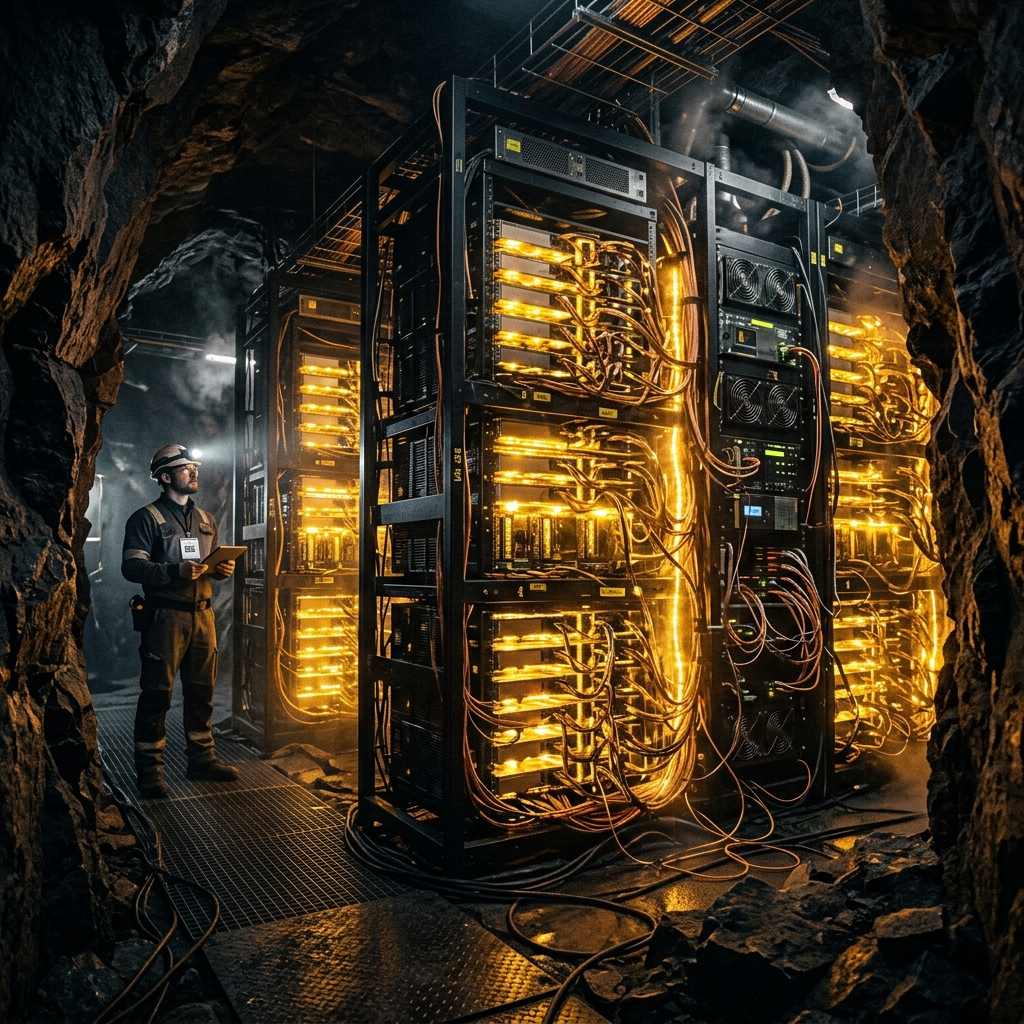
In the fast-paced world of Silicon Valley and Wall Street, we often treat Artificial Intelligence as a brand-new frontier. But seasoned market veterans suggest looking at 100-year-old mining rules to understand the future.
The "Gold Mine Analogy" offers a sobering and brilliant framework for navigating the "roller-coaster" rides of today’s tech giants and AI startups. This framework is increasingly relevant for ai news analysts observing the massive capital inflows into the sector.
The Inverse P/E Rule
When a new gold mine is discovered, the company goes public on a wave of speculation. At this stage, the Price-to-Earnings (P/E) ratio is often infinite because the company hasn't actually pulled any gold out of the ground yet.
According to the veteran Wall Street logic:
- Buy when the P/E is high (or infinite): This is the "Discovery Phase." Investors are buying the dream and the potential of the "vein" of gold.
- The "Value Collapse": As the miners spend fortunes on heavy machinery and infrastructure, profits remain elusive. Stock prices often stumble during this capital expenditure phase.
- Sell when the P/E is low: Paradoxically, as the mine becomes highly profitable, the P/E multiple shrinks because the market knows the mine is getting closer to being empty.
Applying the Mining Map to AI
While it’s tempting to think that chips and neural networks are different from "shiny metal pulled out of dirt," the market mechanics are strikingly similar. This is a critical lesson for ai startups dubai/gcc looking to scale sustainably.
1. The Speculative Discovery
Much like a new gold strike, AI reached a "high P/E" phase almost overnight. Investors poured billions into companies based on the promise of what GenAI could do, even before these companies figured out how to monetize the technology effectively.
2. The Infrastructure Spend
We are currently in the "Equipment Phase." Tech giants are spending hundreds of billions of dollars on Nvidia chips, massive data centers, and cooling systems. As noted in recent gulf ai news, this massive "CapEx" (Capital Expenditure) can cause short-term profit suppression, leading to volatility.
3. The Extraction Phase
Eventually, AI will move from a "dream" to a utility. Profits will soar as the technology is integrated into every corner of the economy. However, as the market reaches saturation, those astronomical multiples will begin to compress.
The Lesson for Modern Investors
The connection between a pickaxe and a GPU is found in investor psychology. Both gold and AI represent a "rush"—a frantic attempt to claim territory in a high-stakes environment.
Key Takeaway
If you are holding AI stocks today, don't be spooked by high multiples or the massive spending on "digital equipment." History suggests that the most pain occurs when the "mine" is being built—but the most significant gains are reserved for those who understand that the volatility is simply part of the excavation process, a sentiment echoed by leading analysts in mena ai news.