A Tale of Two Cities: The Three Emerging Realities of the AI Revolution
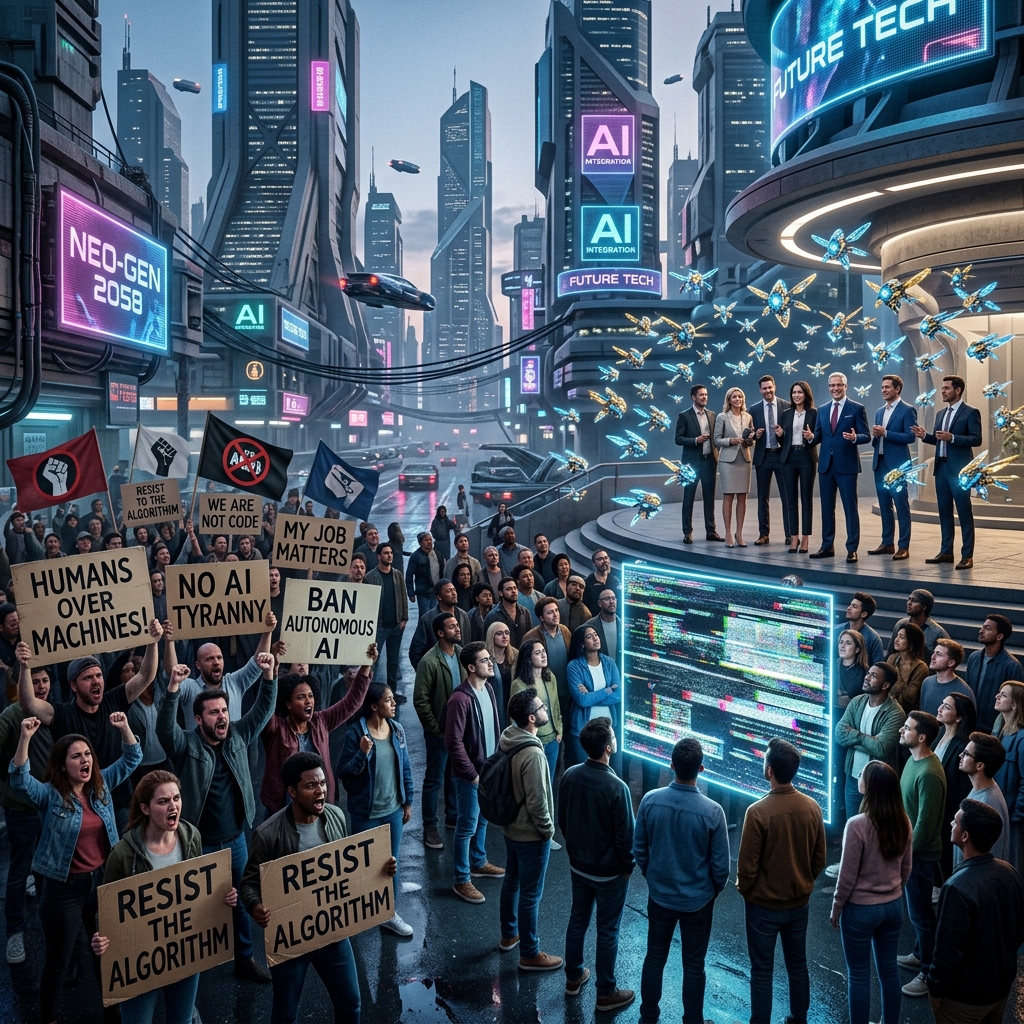
Artificial Intelligence is no longer just a technological advancement; it is a cultural and economic wedge, splitting society into three distinct realities.
According to industry leaders and recent economic reports, the world is now divided into three camps: Power Users, Doubters, and Resisters. As the gap between those who master the tools and those who fear them widens, the friction is moving from online forums to the physical world—a development closely watched by ai news outlets globally.
1. The Power Users: Living in the Future
For the elite tier of AI adopters, the technology is an extension of their own willpower. These users aren't just "chatting" with AI; they are deploying "agent swarms" to automate complex workflows 24/7. This productivity gap is particularly evident in the ai startups dubai/gcc hubs where rapid adoption is the norm.
- The Virtuous Cycle: Anthropic’s recent report reveals that experienced users success more often, creating a massive productivity divide.
- Token Obsession: Experts like Andrej Karpathy reportedly spend up to 16 hours a day issuing commands, rushing to exhaust monthly token limits.
2. The Doubters: Stuck in the "Glitch" Phase
The largest segment of the population remains skeptical. This group often defines AI by its failures—hallucinating chatbots and low-effort content. As reported in mena ai news, many people let a single underwhelming session with a free-tier model define their entire perspective, failing to realize how far the cutting edge has moved.
3. The Resisters: The Rising Backlash
The most significant development is the emergence of the "Resisters." These individuals understand where AI is headed and want no part of it. This group is becoming increasingly radicalized:
- Data Center Protests: Reports of physical attacks on infrastructure have begun to surface in major tech states.
- Targeted Attacks: High-profile tech figures have faced serious security threats from anti-AI activists.
The Bottom Line
The disconnect is now a matter of physical and economic security. As noted in recent gulf ai news analysis, the "economic gap" between those running agent swarms and those fighting to stop them is becoming the defining conflict of 2026. Whether the industry can bridge this divide remains the most pressing question of the era.