The Ghost in the Substack: A Research Analysis of AI Prevalence in Top Newsletters
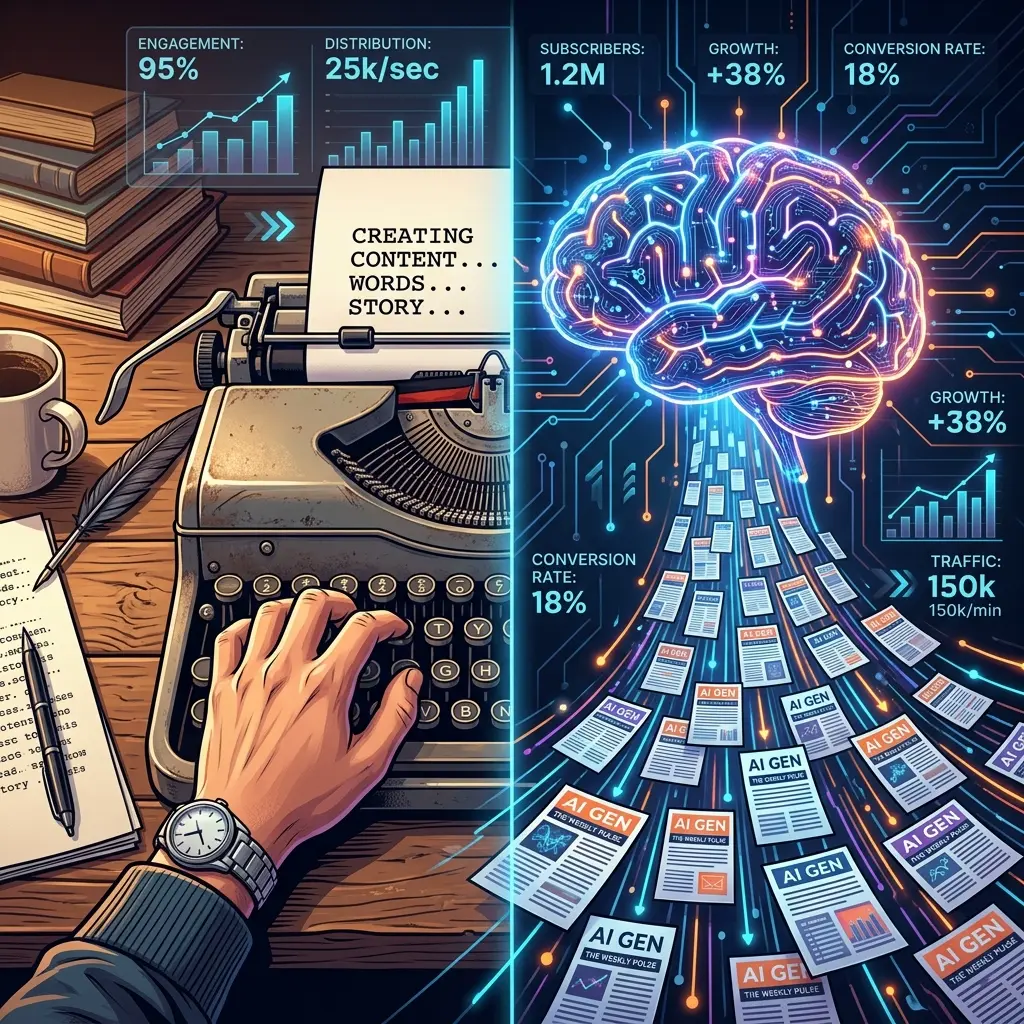
As pundits predict up to 90% of online content could be AI-generated by the end of 2026, the sanctuary of the "human-centric" newsletter is being tested. We analyze the infiltration of AI "slop" into Substack's bestseller lists.
The digital landscape is shifting. A viral, entirely synthetic debate between Elon Musk and Keanu Reeves in early 2025 served as a wake-up call: even on Substack, the lines between human thought and algorithmic output are blurring. This raises concerns similar to those discussed in studies on AI mirroring, where algorithmic text behavior mimics—and sometimes degrades—human interaction.
To quantify this shift, a deep-dive analysis utilized the Pangram API to scan the 10 most recent posts from the top 25 Bestsellers across every Substack category.
Key Findings: The Human-AI Ratio
The good news for purists? Substack remains a predominantly human ecosystem—for now. 66% of top publications (384 out of 575 newsletters) showed zero traces of AI-generated content.
The "Slop" Minority
A small group of high-volume publishers are responsible for the lion's share of synthetic content. Just 29 publications produced half of all majority-AI posts identified.
Category Breakdown: Where the AI Lives
AI adoption is not uniform. The data suggests that "analytical" or "fact-heavy" niches are significantly more susceptible to automation than those relying on personal voice or sensory experience.
Top AI-Utilizing Categories
- Technology 28%
- Philosophy 23%
- Health 22%
- Business 14.4%
Human-Centric Fortresses
- Music 1%
- Food & Drink 3%
- Sports 5%
Observation: Readers appear to have a high tolerance for AI-shaped information regarding health or tech (a trend also seen in ai startups dubai/gcc news roundups), but they reject synthetic voices when it comes to cultural commentary.
The Rise of the "Outlier" Newsletter
The research uncovered a concerning trend: Category Warping. In several niches, the "average" amount of AI is skewed by one or two bad actors running fully automated operations.
In World Politics, the category mean is 8.4%. However, if you remove just two major AI-driven newsletters, that number plummets to 2%. These automated outliers are often top-ranked Bestsellers, suggesting that operators are generating significant revenue by scaling "slop" in human-dominated categories.
Methodology & Limitations
The analysis utilized the Pangram detection model, which identifies linguistic signatures of LLMs. It requires a minimum of 50 words and favors "Human" results in ambiguous cases to avoid false positives. For newsletters with paid tiers, only free preview text was analyzed.
The Future of the Human Writer
While Substack is staving off the "slopification" of the internet more effectively than social media, the pressure on human creators is mounting. In the Technology sector, where 1 in 4 posts is AI-influenced, human writers face a difficult choice: automate mundane tasks to keep pace, or double down on the "human signal" that AI cannot replicate.
For readers keeping up with ai news, the directive is clear: in an era of synthetic virality, the "Subscribe" button requires more discernment than ever before.