80% of GCC Organizations Have an AI Strategy, But Data Readiness Lags: Roland Berger Report
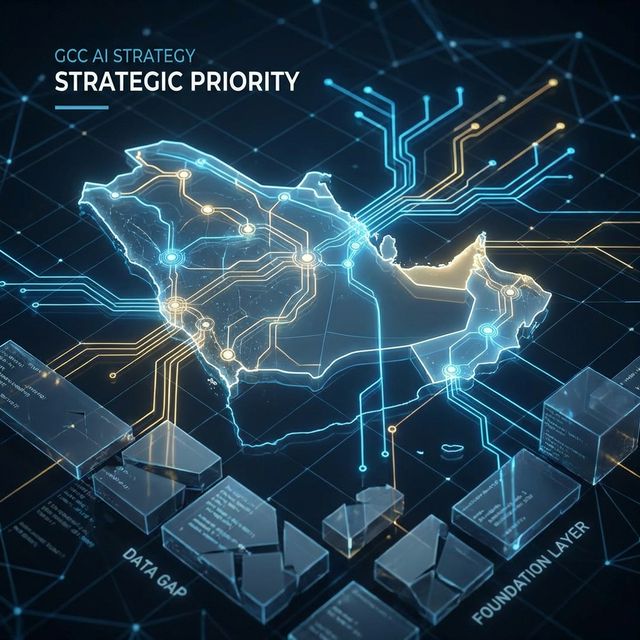
Artificial Intelligence has undeniably become a strategic priority across the Gulf Cooperation Council (GCC). A new report by Roland Berger reveals a striking statistic: 4 in 5 (80%) GCC organizations now have a defined AI strategy. However, beneath this high-level commitment lies a critical bottleneck—only 34% possess the enterprise-wide data foundation required to truly scale these initiatives.
The Strategic Imperative: Vision vs. Reality
The Roland Berger findings underscore the rapid acceleration of AI adoption in the region, driven by national visions like the UAE's Strategy for Artificial Intelligence and Saudi Arabia's Vision 2030. Leaders in the public and private sectors recognize AI not just as a tool for efficiency, but as a catalyst for economic diversification and competitive advantage.
"The high percentage of organizations with an AI strategy reflects the region's ambition," the report notes. Investments are pouring into infrastructure, talent acquisition, and pilot programs. Yet, the gap between having a strategy and executing it at scale remains significant.
The Data Foundation Bottleneck
The most alarming finding is the "Data Readiness Gap." While 80% have the roadmap, only roughly one-third (34%) have the "right data foundation" to support enterprise-wide AI scaling.
The Scaling Challenge
Without robust data governance, clean datasets, and integrated pipelines, AI models remain trapped in "pilot purgatory"—successful in isolated tests but failing when applied to broader business operations.
This gap highlights a common challenge: legacy systems, data silos, and a lack of standardized data protocols. For Gulf organizations to move from experimentation to value generation, the focus must shift from model acquisition to data engineering.
What "Data Readiness" Means for the GCC
To close this gap, organizations need to prioritize three key areas:
- Unified Data Architecture: Breaking down silos between departments (e.g., finance, HR, operations) to create a single source of truth.
- Data Governance & Quality: ensuring data used to train or fine-tune models is accurate, unbiased, and representative of the region's specific context.
- Security & Sovereignty: Adhering to local data residency regulations (such as those in UAE and Saudi Arabia) while enabling cloud scalability.
The Path Forward
The Roland Berger report serves as a wake-up call. The "strategy phase" is largely complete; the "infrastructure phase" is now critical. Winners in the next 12-24 months will not necessarily be those with the most advanced AI models, but those with the most accessible and reliable data.
As the region competes globally, the 66% of organizations lacking a strong data foundation must accelerate their digital transformation efforts or risk falling behind peers who can deploy AI at speed and scale.
Source: Roland Berger Middle East Report via Zawya
Related Topics: AI Strategy, GCC AI Readiness