China vs. U.S. Humanoid Robot Race: Shipment Lead vs. Valuation Dominance
China ships 90% of the world's humanoid robots. U.S. startups hold valuations orders of magnitude larger. Inside the "Shipment-Valuation Paradox" reshaping the global robotics industry — and what it means for capital flowing through the Gulf.
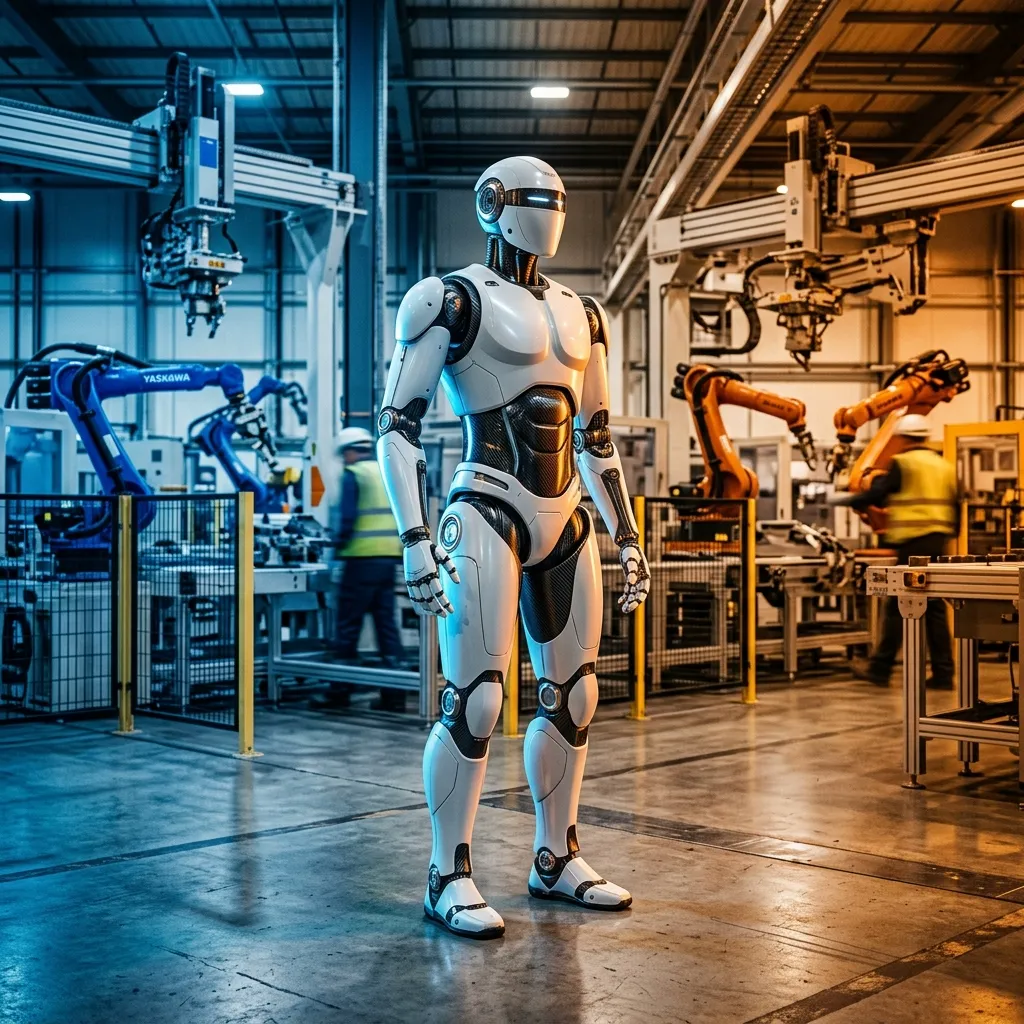
The humanoid robot sector has reached a critical inflection point in 2026. Chinese startups have successfully transitioned from R&D to mass production, accounting for the vast majority of global unit shipments. Meanwhile, U.S. firms continue to hold a commanding lead in capital valuation. This "Shipment-Valuation Paradox" reflects a fundamental divergence in investor philosophy that has significant implications for how the next phase of industrial automation will be financed — and where.
China's Manufacturing Moat
In 2025, the global humanoid robot market saw approximately 13,000 to 16,000 unit installations. The geographic concentration was stark: China accounted for roughly 90% of all global humanoid shipments. The top six spots in global shipment rankings were held exclusively by Chinese firms, including AgiBot, Unitree Robotics, and UBTECH. Only two U.S. companies — Figure AI and Tesla — managed to break into the global top ten, with Tesla's Optimus primarily deployed internally across its own facilities.
| Region | Market Share | Key Drivers |
|---|---|---|
| Asia Pacific (China-led) | ~82% | Government funding, EV supply chain integration |
| North America (U.S.-led) | ~10% | Deep R&D, enterprise pilots (BMW, etc.) |
| Europe | ~6% | Automotive OEM integration |
| Rest of World | ~2% | Service sector & hospitality |
The Valuation Gap: Silicon Valley vs. Shenzhen
Despite shipping fewer units, U.S. startups command valuations that dwarf their Chinese counterparts. Western investors are pricing "Embodied AI" as the next trillion-dollar software frontier — not merely a hardware category.
U.S. Valuations
China Valuations
The U.S. valuation lead is driven by "Platform Pricing." Investors believe companies like Figure will own the operating system for physical labor — analogous to Microsoft's dominance in PCs. Chinese firms are currently valued as component and hardware leaders: excellent at scale, but not yet pricing in the software layer.
The Middle East as the Swing Investor
The investment landscape is being reshaped by U.S.-China geopolitical tensions. Major American pension funds have significantly reduced exposure to Chinese tech due to regulatory and national security concerns. That gap is being filled by sovereign wealth funds from the Gulf — entities such as the Qatar Investment Authority — which are uniquely positioned to "play both sides." They are investing in U.S. high-end R&D while simultaneously purchasing Chinese hardware for their own industrial transitions away from fossil fuels. For Gulf policymakers, the humanoid robot race is not a spectator sport.
Operational Milestones in 2026
While U.S. robots are primarily in pilot phases — Figure 02 handling 90,000 parts in a BMW factory — Chinese robots are achieving milestones in public-facing and extreme environments. In April 2026, a Chinese-developed robot broke the human half-marathon world record, completing the race in 50 minutes and 26 seconds. Chinese startups are also deploying robots in airports, semiconductor fabrication facilities, and healthcare settings at commercial scale.
Conclusion: A Bifurcated 2030
China is leveraging its "Electric Vehicle playbook" — standardized supply chains and mass manufacturing to drive costs down. The U.S. is betting on AI breakthroughs via partnerships with OpenAI and NVIDIA to create robots with superior cognitive flexibility. The critical test for 2027 will be whether Tesla can scale Optimus Gen 3 to mass production — and whether that narrows the shipment gap in any meaningful way. Either outcome will have substantial implications for how robotics investment flows through the Gulf in the years ahead.
Topics